.png)
Standing Up for Your Rights with an ADA Lawyer
Why Civil Rights ADA Lawyers Matter for People with Disabilities
Civil rights ADA lawyers help people with disabilities fight discrimination in the workplace, in public spaces, and online. If you're facing disability discrimination in Michigan, here's what you need to know right away:
Quick answers:
- Workplace discrimination (firing, denied accommodations) → contact an ADA employment lawyer or file with the EEOC
- Public places (restaurants, hotels, stores) → file with the Department of Justice (DOJ)
- Housing → file with the Department of Housing and Urban Development (HUD)
- Air travel → file with the Department of Transportation (DOT)
- Free legal help → contact your state's Protection and Advocacy (P&A) agency through the National Disability Rights Network
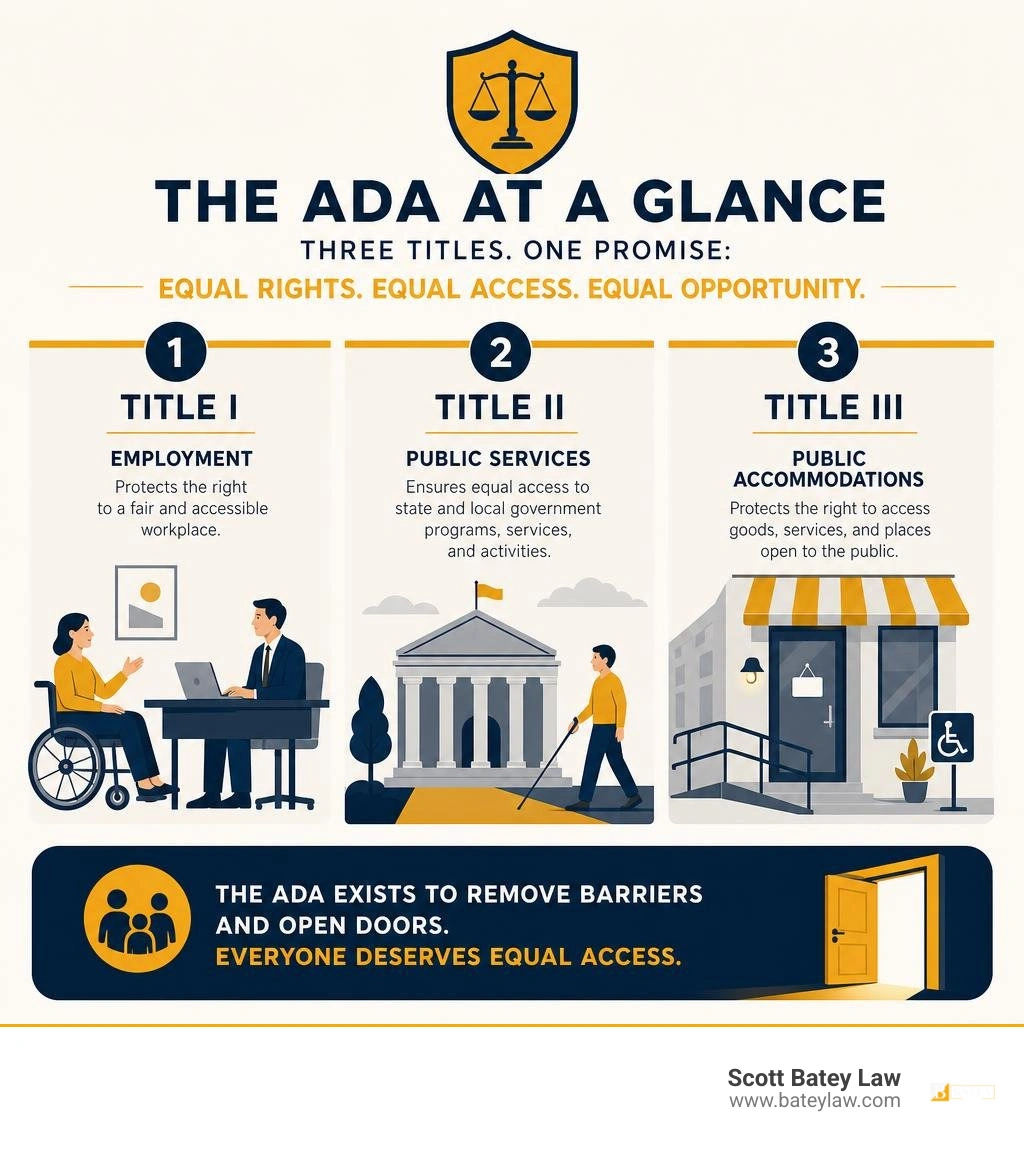
The Americans with Disabilities Act (ADA) is one of the most powerful civil rights laws in the United States. It protects people with disabilities from discrimination at work, in public businesses, in government services, and increasingly online. But knowing your rights and actually enforcing them are two very different things.
That gap is exactly where a civil rights ADA lawyer comes in.
Whether you've been fired after requesting a workplace accommodation, denied access to a service, or faced barriers that shouldn't exist, the law gives you real tools to fight back. This guide walks you through how the ADA works, who enforces it, and how to find the right legal help.
I'm Scott Batey, a Michigan employment lawyer with nearly 30 years of experience representing employees in civil rights ADA lawyers cases and related workplace disputes, including wrongful termination, disability accommodation denials, and retaliation. In the sections below, I'll break down exactly how ADA protections work and what your options are when an employer or business crosses the line.
Understanding ADA Protections and Federal Complaint Processes
Navigating disability rights can feel overwhelming, especially when you are dealing with physical barriers, systemic exclusion, or a hostile work environment. The ADA provides a robust legal framework, but because it covers so many different aspects of daily life, enforcement is split across several different federal agencies.
If you believe your civil rights have been violated, the first step is often understanding which federal agency has jurisdiction over your specific situation.
To help you visualize where different types of complaints should be directed, we have compiled a quick reference table outlining the primary federal agencies and their jurisdictions under the ADA:
| Agency | Primary Jurisdiction | Types of Violations Handled |
|---|---|---|
| Equal Employment Opportunity Commission (EEOC) | Employment (Title I) | Workplace discrimination, failure to accommodate, medical leave retaliation |
| Department of Justice (DOJ) Civil Rights Division | Public Accommodations (Title III) & State/Local Gov (Title II) | Physical barriers in businesses, inaccessible government programs, digital exclusion |
| Department of Housing and Urban Development (HUD) | Housing & Residential Spaces | Inaccessible apartment complexes, denial of service animals in housing, rental bias |
| Department of Transportation (DOT) | Public Transit & Air Travel | Inaccessible buses/trains, airport shuttle barriers, airline boarding discrimination |
Understanding these jurisdictions is crucial because filing your complaint with the wrong agency can lead to significant administrative delays, which can be devastating when you are facing strict legal deadlines.
Filing with the DOJ, EEOC, and Other Federal Agencies
When you experience discrimination, filing an administrative complaint with a federal agency is often a mandatory first step before you can file a formal lawsuit in court. For example, if you face discrimination in the workplace, you generally cannot go straight to court. Instead, you must first file a "Charge of Discrimination" with the EEOC.
If you are facing workplace discrimination here in Michigan, working with an experienced disability discrimination attorney michigan is vital. We can help you draft your EEOC charge to ensure all legal elements are met, protecting your right to sue if the administrative process does not resolve the issue.
It is incredibly important to keep the statute of limitations in mind. For EEOC charges, you generally have only 180 days from the date of the discriminatory act to file a complaint. This timeline can be extended to 300 days if the state has its own civil rights agency (like the Michigan Department of Civil Rights), but you should never wait. Missing these deadlines can permanently bar you from seeking justice.
For non-employment issues—such as physical barriers at a local hotel, an inaccessible municipal building, or a website that does not work with screen readers—complaints are submitted to the DOJ Civil Rights Division. The DOJ accepts complaints online or by mail.
Once you submit a complaint to the DOJ, the review process begins. Because of the massive volume of complaints the DOJ receives, the initial review can take up to three months.
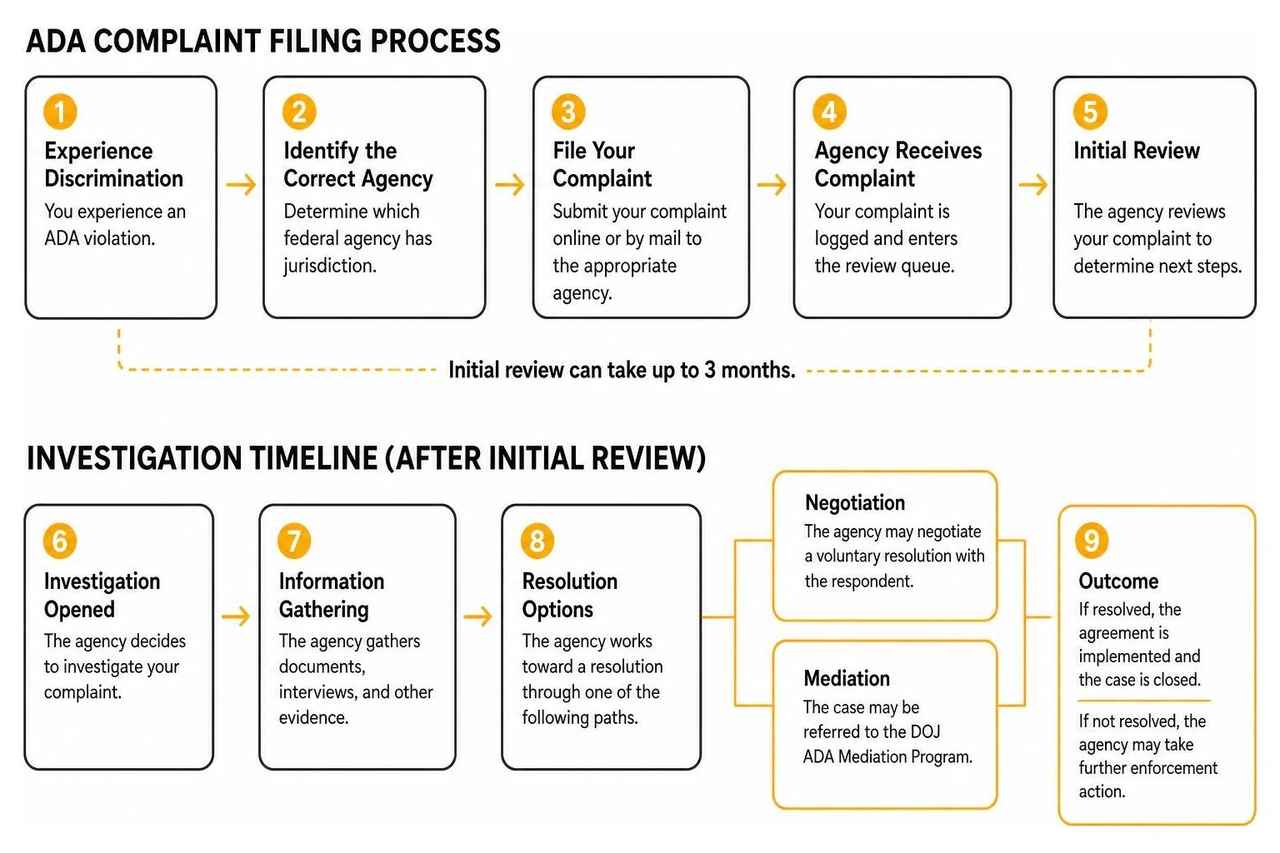
If the DOJ decides to investigate your complaint, they may attempt to negotiate a settlement with the business or government entity, or they may refer the case to their specialized mediation program.
The Role of the ADA Mediation Program
The ADA Mediation Program is a highly effective, voluntary, and entirely confidential alternative to traditional litigation. Managed by the DOJ, this program utilizes professional, independent mediators to help individuals with disabilities and business owners resolve accessibility disputes without going to court.
Mediation is often much faster and less adversarial than a lawsuit. It allows both parties to sit down, discuss the barriers, and find creative, practical solutions. For example, a local restaurant might agree to install a ramp, train their staff on serving customers with disabilities, and modify their policies in exchange for the complainant resolving the dispute.
Leading ADA policy experts, such as those featured in the David Fram Biography, have long emphasized that proactive education, open communication, and structured dispute resolution are often the most effective ways to achieve lasting accessibility. When both parties participate in mediation in good faith, they can achieve a win-win outcome that opens physical and digital spaces to the community far faster than a multi-year court battle.
How Civil Rights ADA Lawyers Fight Systemic Discrimination
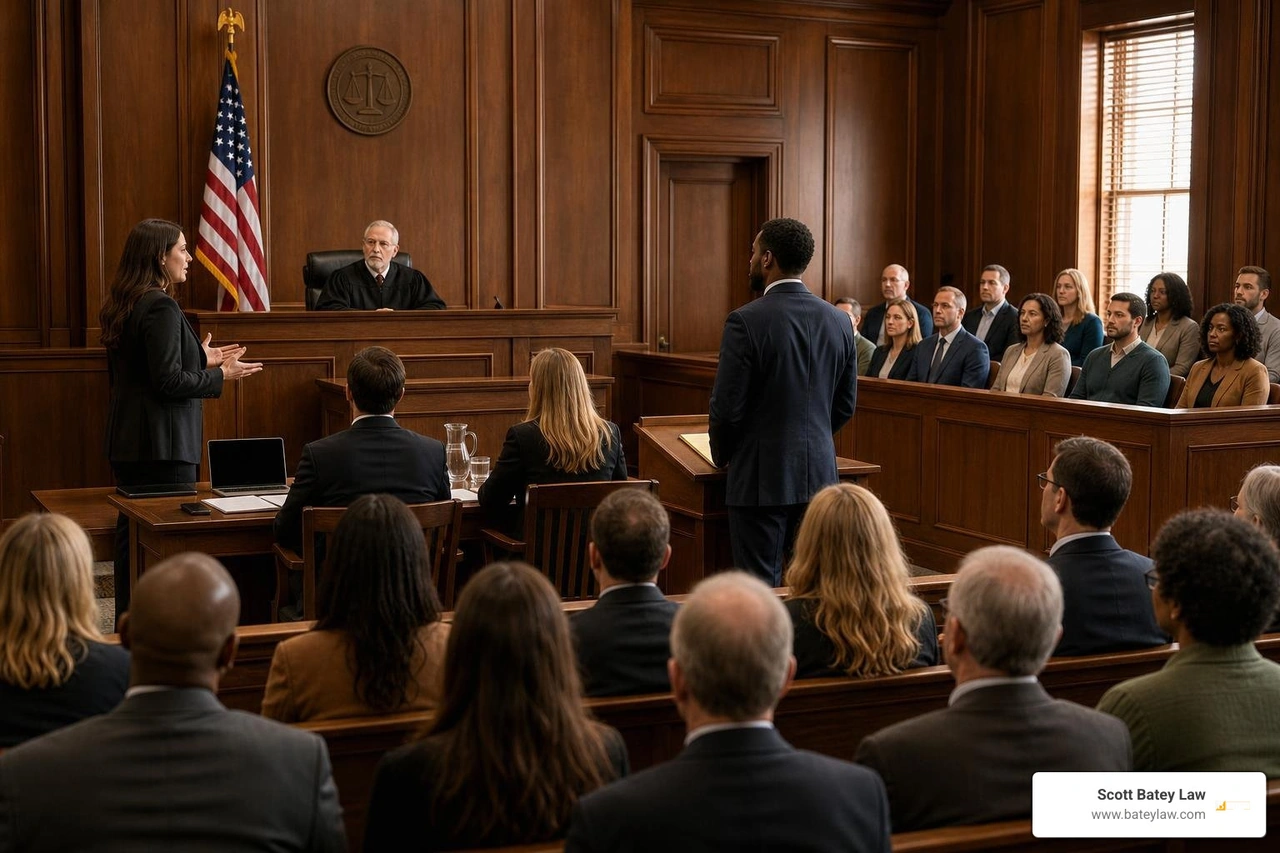
While individual complaints can resolve localized issues, achieving widespread, structural change often requires the intervention of dedicated civil rights ada lawyers. These legal advocates use the power of the federal courts to dismantle systemic barriers that exclude entire groups of people from participating fully in society.
When to Consult Civil Rights ADA Lawyers for Workplace Discrimination
In the employment context, discrimination often takes subtle forms. You might be denied a reasonable accommodation that would allow you to perform your job duties, or you might find yourself suddenly targeted for termination shortly after returning from a medical leave.
Under Title I of the ADA, employers are required to engage in an "interactive process" with employees who request accommodations. This is a collaborative dialogue aimed at finding a solution that allows the employee to work effectively without posing an "undue hardship" on the employer.
Unfortunately, many employers fail to take this obligation seriously. They may rely on illegal policies, such as requiring an employee to be "100% healed" before returning to work, which is a major red flag under both the ADA and the Family and Medical Leave Act (FMLA).
If you are experiencing these issues in Oakland County or the surrounding Metro Detroit area, consulting an ada accommodation lawyer bingham farms or an fmla ada lawyer in bingham farms michigan can help you protect your career. We can assist you in documenting your accommodation requests, navigating the interactive process, and holding your employer accountable if they violate your rights.
Understanding the deep complexities of how these laws interact is essential. Renowned ADA authorities, whose credentials can be explored on the About William Goren | Understanding the ADA® page, have dedicated their careers to analyzing how the ADA, the Rehabilitation Act, and state-level protections overlap. This high-level legal scholarship directly informs how plaintiff-side lawyers build airtight cases for workers who have been wrongfully terminated or denied their rightful accommodations.
On the defense side, prominent national corporate attorneys like Joshua A. Stein – ADA and Public Accommodations Attorney – New York | Epstein Becker Green and Minh Vu specialize in advising major businesses on how to build compliance infrastructures and defend against class-action lawsuits. Understanding how corporate defense lawyers approach these cases helps us anticipate their strategies and build stronger, more resilient cases for our clients.
Landmark Class Actions and Systemic Change
When individual advocacy isn't enough to break down widespread barriers, class action lawsuits become a vital tool. A class action allows one or a few individuals to represent thousands of others who are facing the exact same discriminatory barriers.
Civil rights pioneers like Linda Dardarian have demonstrated the immense power of class actions to reshape public infrastructure. Through landmark litigation and consent decrees, Dardarian and her colleagues have secured massive, systemic remedies, including:
- Sidewalk Curb Ramps: Securing historic settlements valued at over $1.4 billion to remediate hundreds of thousands of inaccessible sidewalks and curb ramps in major metropolitan areas, ensuring safe pedestrian travel for wheelchair users.
- Stadium Access: Resolving systemic physical barriers in major professional sports stadiums, resulting in multi-million dollar damages funds and comprehensive physical modifications to seating, parking, and pathways.
- Alternative Communication: Forcing healthcare systems and retail giants to implement talking pill bottles, accessible point-of-sale machines, and alternative formats (such as Braille and large print) for blind and low-vision individuals.
These cases prove that litigation is not just about individual compensation—it is about rewriting the rules so that the world becomes fundamentally more inclusive for everyone.
Digital Accessibility and State-Level Protections
As our daily lives have migrated online, the fight for civil rights has expanded from physical brick-and-mortar spaces to the digital realm. Today, a website or mobile application that is incompatible with assistive technologies—such as screen readers or voice control software—is just as much of a barrier as a flight of stairs in front of a public building.
Key Legal Requirements for Websites and Mobile Apps
The DOJ has made it clear that both Title II (governing state and local governments) and Title III (governing public accommodations) of the ADA apply to digital spaces. This means that private businesses that serve the public, as well as public entities like schools and municipal courts, must ensure their websites, mobile apps, and digital documents are accessible.
To evaluate digital accessibility, courts and regulators look to the Web Content Accessibility Guidelines (WCAG). These international standards outline how to make web content accessible to people with visual, auditory, physical, and cognitive disabilities.
Common digital barriers include:
- Images lacking descriptive alternative text (alt text) for screen reader users.
- Videos lacking accurate closed captioning or audio descriptions.
- Websites that cannot be navigated entirely using a keyboard.
- Online forms that lack clear labels or time limit adjustments.
Some businesses attempt to bypass true accessibility by installing "overlays" or "widgets"—quick-fix software plugins that promise instant compliance. However, digital accessibility experts warn that these overlays often make websites less accessible by interfering with users' native assistive technologies, leading to increased legal exposure rather than protection.
How Civil Rights ADA Lawyers Use Structured Negotiation
While traditional litigation is sometimes necessary, many of the most significant advancements in digital accessibility have been achieved through a collaborative process known as Structured Negotiation.
Pioneered by disability rights advocate Lainey Feingold, whose work is detailed on the Law Office of Lainey Feingold – Digital Accessibility Ethics | Structured Negotiation | Disability Rights website, Structured Negotiation is a dispute resolution framework that bypasses the courtroom entirely. Instead of filing a lawsuit, advocates and their clients present a detailed description of the accessibility barriers to a corporation and invite them to collaborate on a solution.
This "dolphin-like" approach—relying on communication, teamwork, and mutual problem-solving rather than "shark-like" adversarial litigation—has led to dozens of groundbreaking, non-litigated settlements with major financial institutions, retail giants, and healthcare providers. It focuses on long-term organizational change, policy integration, and collaborative procurement, proving that cooperation can often achieve faster, more sustainable accessibility than a court order.
State-Level Protections: PWDCRA vs. ADA
If you are a worker here in Michigan, you are protected by both federal law (the ADA) and state law. Michigan's primary disability civil rights statute is the Persons with Disabilities Civil Rights Act (PWDCRA).
While both laws aim to prevent discrimination, they have distinct differences that can dramatically impact your legal strategy. Understanding pwdcra vs ada in michigan which law applies to your disability claim is essential for anyone seeking justice.
A key difference lies in what reasonable accommodation in michigan what ada and pwdcra actually require. For example:
- Written Notice Requirement: Under the PWDCRA, an employee must provide their employer with a written request for an accommodation within 182 days of the date they knew or reasonably should have known that an accommodation was needed. If you fail to provide this written notice within the strict 182-day window, you may lose your right to sue under state law. The federal ADA does not have this strict, formal written notice deadline.
- Reassignment as an Accommodation: Under the federal ADA, if you can no longer perform the essential functions of your current job due to a disability, your employer may be required to reassign you to a vacant, equivalent position as an accommodation of last resort. Under Michigan's PWDCRA, however, employers are generally not required to reassign or transfer you to a different position; the accommodation must help you perform your current job.
Because of these nuances, an experienced Michigan employment lawyer will often file claims under both laws simultaneously to ensure you receive the maximum possible protection and damages.
Finding Free or Low-Cost Legal Advocacy
If you are facing an ADA issue but cannot afford a private attorney, there are federally mandated resources available to help you.
Under federal law, every state and U.S. territory has a designated Protection and Advocacy (P&A) system and a Client Assistance Program (CAP). The P&A/CAP network is the largest provider of legally based advocacy services for people with disabilities in the country.
In Michigan, this agency is Michigan Alliance for Families and Michigan Protection & Advocacy Service (now known as Disability Rights Michigan). These organizations provide free legal representation, advocacy, and technical assistance to individuals with disabilities who are facing discrimination, abuse, or neglect.
Additionally, you can contact the National Disability Rights Network (NDRN) or local bar associations to find referrals for legal aid organizations and pro bono legal programs in your area.
Frequently Asked Questions about ADA Law
What is the difference between the ADA and state disability laws?
The ADA is a federal civil rights law that provides a baseline of protection across the entire United States. However, states can pass their own laws that offer additional protections or have different procedural requirements.
In Michigan, the Persons with Disabilities Civil Rights Act (PWDCRA) is our state-level protection. The PWDCRA covers smaller employers than the ADA (the ADA covers employers with 15 or more employees, while the PWDCRA covers employers with 1 or more employees). However, the PWDCRA also has strict procedural rules, such as the 182-day written notice requirement for accommodation requests.
How long does the DOJ take to review an ADA complaint?
Because the Department of Justice receives tens of thousands of civil rights complaints every year, their review process is extensive. It typically takes up to three months to receive an initial response or status update regarding your complaint. If you have not heard back after three months, you can contact the ADA Information Line to check on the status of your submission.
Does the ADA require retail stores to provide Braille gift cards?
No. Federal courts have established clear legal precedent that the ADA does not require retail stores or restaurants to provide Braille gift cards.
The courts have ruled that gift cards are goods or merchandise, rather than a "place of public accommodation" itself. As long as the store provides alternative assistance—such as an employee reading the card's balance or numbers to a blind customer—they are in compliance with the ADA's requirements for equal access.
Conclusion
Facing disability discrimination, wrongful termination, or a refusal to accommodate can make you feel incredibly isolated. But you do not have to navigate this complex legal landscape alone. Whether you are dealing with a hostile work environment, a complex FMLA overlap, or a clear violation of your civil rights, the law is on your side—and so are we.
At Scott Batey Law, we have spent nearly 30 years fighting for the rights of workers in Bingham Farms, Southfield, Troy, Royal Oak, Oakland County, and throughout the Metro Detroit area. We specialize in representing employees who have faced workplace discrimination elcra, ADA violations, wrongful termination, and retaliation.
We believe in providing compassionate, personalized, and award-winning representation. We take the time to understand your unique story, explain your options clearly, and build a powerful legal strategy designed to get you the justice and peace of mind you deserve.
If you are ready to stand up for your rights, contact us today to schedule a consultation. Let us help you hold your employer accountable and secure the accommodations and respect you are legally entitled to.