
Fighting Workplace Discrimination with Employee Rights Attorneys

When You Need a Civil Rights Employment Attorney: What Michigan Workers Should Know
A civil rights employment attorney is a lawyer who helps workers fight illegal treatment at work — including discrimination, harassment, retaliation, and wrongful termination — under federal and state civil rights laws.
If you're a Michigan employee dealing with workplace mistreatment, here's what you need to know right away:
- Who they help: Employees facing discrimination based on race, sex, age, disability, national origin, or other protected characteristics
- Key laws they use: Title VII of the Civil Rights Act, the Americans with Disabilities Act (ADA), the Fair Labor Standards Act (FLSA), and Michigan's Elliott-Larsen Civil Rights Act (ELCRA)
- What they can recover for you: Lost wages, reinstatement, compensatory damages, punitive damages, and attorney's fees
- When to contact one: As early as possible — deadlines to file a claim can be as short as 180 days from the discriminatory act
Employment discrimination cases are rarely simple. Federal and state laws overlap. Deadlines are strict. Employers often have experienced legal teams working against you from day one. The decisions you make in the early stages of a workplace dispute can determine whether you have a strong case — or no case at all.
That's why who you hire matters.
I'm Scott Batey, founder of Batey Law Firm, PLLC in Bingham Farms, Michigan, and I've spent nearly 30 years representing employees — not employers — as a civil rights employment attorney across Michigan, helping workers in wrongful termination, discrimination, harassment, retaliation, and disability accommodation disputes. In the sections below, I'll walk you through how civil rights employment law works, what rights you have, and how to protect them.
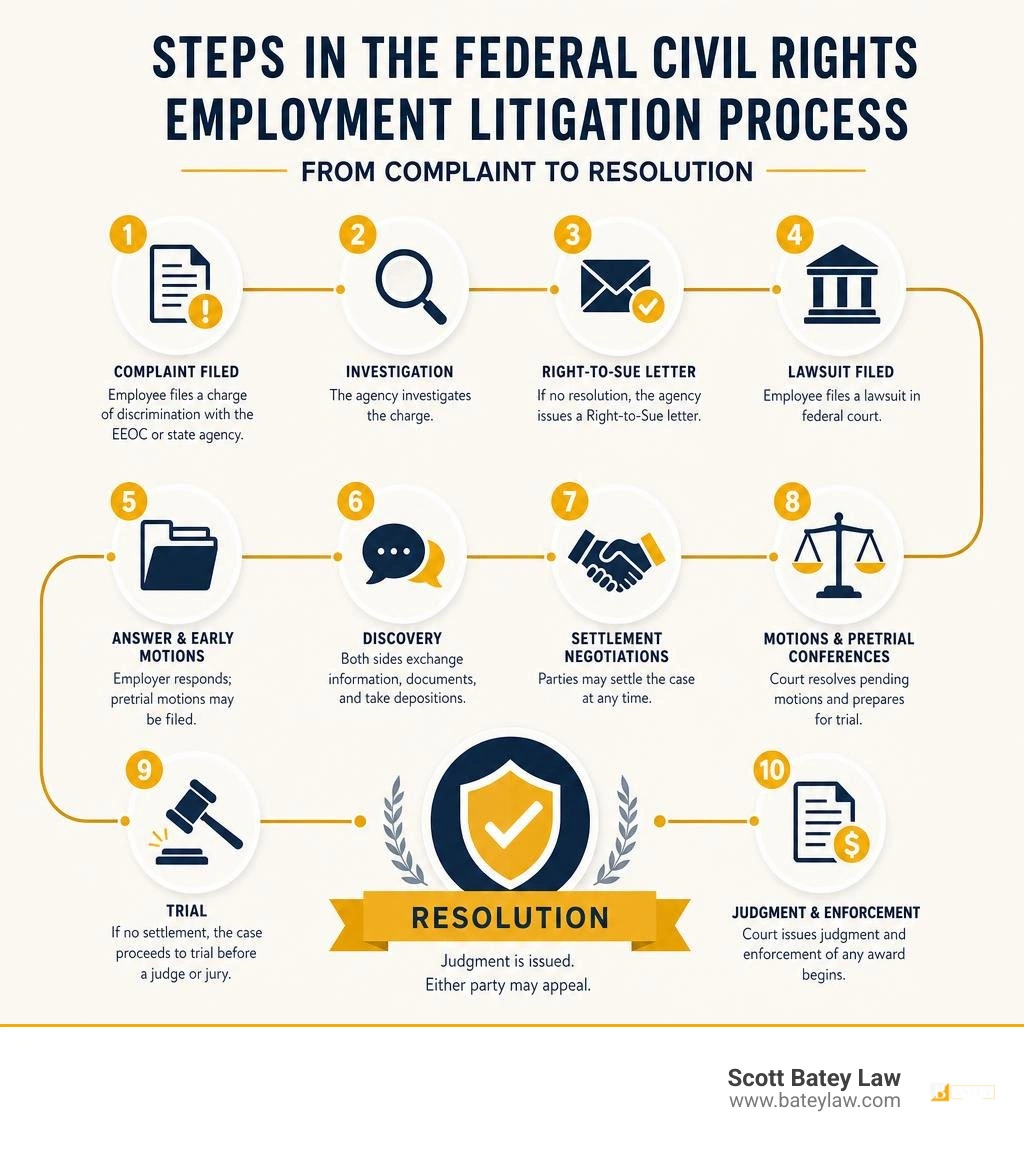
The Dual Perspective of a Civil Rights Employment Attorney
To beat a corporate legal team, you have to understand how they think. The most effective advocacy comes from knowing both sides of the courtroom. In high-stakes litigation, some of the most prominent legal minds have transitioned between public interest civil rights advocacy and corporate defense.

A prime example of this is Kerry Alan Scanlon | People | McDermott , who serves as the head of the US labor and employment litigation practice at McDermott Will & Emery. Scanlon’s career illustrates how an attorney's deep background in public service and civil rights enforcement shapes how they defend companies—and, conversely, how understanding these defense strategies helps us protect workers.
When you hire an Employment Law Attorney Metro Detroit, you want someone who can anticipate the exact playbook the defense will use. Corporate defense lawyers who spent years with organizations like the NAACP Legal Defense & Educational Fund (LDF) or the Washington Lawyers’ Committee for Civil Rights and Urban Affairs know the federal civil rights framework inside and out. They use this dual perspective to build bulletproof defenses for employers. Our job is to use that same deep legal knowledge to tear those defenses down and protect Michigan workers.
How a Civil Rights Employment Attorney Transitions from Public Advocacy to Corporate Defense
How does someone go from fighting for civil rights to defending massive corporations? It is a common path for elite litigators. During his public interest career, Scanlon spent a combined 15 years with the NAACP LDF and the Washington Lawyers' Committee, where he was successful in over 100 major cases.
When litigators with this level of experience transition to private practice, they bring an unparalleled understanding of how civil rights laws are enforced. For corporate clients, hiring a former civil rights advocate means getting someone who can audit their internal policies, predict where employees might file lawsuits, and shut down class actions before they start. For us, studying their corporate defense perspective allows us to build stronger, more resilient cases for everyday employees in Southfield, Troy, and Royal Oak.
Why Employees Need a Civil Rights Employment Attorney to Navigate Complex Federal Laws
When you are facing discrimination at work, you aren't just fighting your boss; you are fighting a complex web of federal statutes. Title VII of the Civil Rights Act of 1964, the Americans with Disabilities Act (ADA), and the Fair Labor Standards Act (FLSA) are massive, complicated laws.
Corporate defense teams know how to use procedural technicalities to get your case thrown out of federal court before a jury ever hears it. To survive these tactics, you need a dedicated Michigan Employment Lawyer for Employees who knows how to structure your claims, gather the right evidence, and guide you through the federal court system.
Shaping Landmark Civil Rights Legislation and Legal Precedents
The federal laws we rely on today to protect workers did not appear out of thin air. They were shaped by decades of intense legal battles and bipartisan legislative drafting. Highly experienced civil rights attorneys have played direct roles in writing the very laws that govern our workplaces.
For example, during his public service career, Kerry Alan Scanlon played an instrumental role in the enactment of landmark job discrimination legislation, including the Civil Rights Act of 1991 and the Fair Housing Amendments Act of 1988. These laws fundamentally changed the legal landscape for employees across the United States.
| Feature | Civil Rights Act of 1964 (Original) | Civil Rights Act of 1991 (Amendments) |
|---|---|---|
| Right to Jury Trial | Extremely limited in standard discrimination cases | Expanded to allow jury trials for intentional discrimination |
| Damages Available | Back pay and reinstatement only | Allowed compensatory and punitive damages |
| Disparate Impact Claims | Standard of proof was shifting and unclear | Codified the burden of proof for systemic discrimination |
| Caps on Damages | No compensatory/punitive damages to cap | Tiered caps based on employer size (up to $300,000) |
The Civil Rights Act of 1991 was a massive victory for workers because it allowed victims of intentional discrimination to sue for compensatory and punitive damages, and it gave them the right to have their cases heard by a jury of their peers rather than a single federal judge.
Key Precedents in Federal Courts and the Supreme Court
Beyond writing legislation, elite civil rights attorneys establish the precedents that dictate how future cases are decided in the federal courts of appeal and the U.S. Supreme Court.
In class action litigation, for instance, defense attorneys have successfully argued key procedural points that limit how and when employees can band together to sue. Precedents established in federal courts—such as those ruling that class action settlements do not always require expensive individual notice to absent class members under due process—directly impact how class actions are managed today.
If you are looking for the Best Employment Lawyers in Royal Oak, MI to handle a complex workplace dispute, you need a team that stays on top of these shifting federal precedents.
Corporate Defense and Class Action Litigation Strategies
To understand how to win an employee rights case, it helps to look at how the world’s largest corporations defend themselves. When multi-billion-dollar companies face massive class actions, they hire top-tier defense firms to protect their bottom lines.
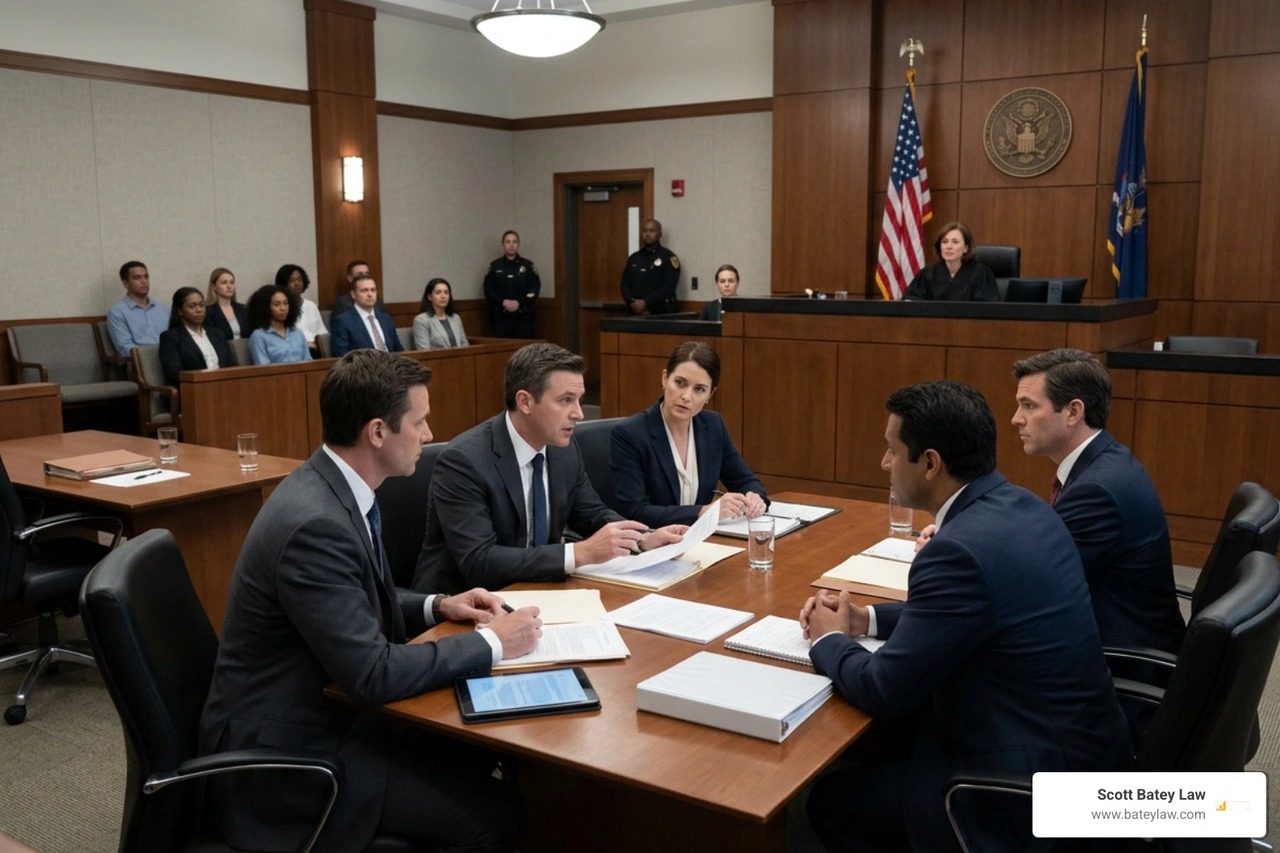
Consider the sheer scale of corporate defense: Scanlon once prevailed in all 60 cases litigated over an eight-year period in federal court on behalf of one of the world’s largest media conglomerates. This level of success is achieved through aggressive, highly strategic defense tactics designed to dismantle an employee's case step-by-step. If you are preparing to file a claim, working with an experienced Workplace Discrimination Lawyer in Bingham Farms MI is your best tool to counter these corporate strategies.
Defending Major Corporations Against Systemic Claims
In large-scale litigation, corporations frequently face systemic discrimination claims under the ADA and Title VII. These cases often revolve around public accommodations, reasonable accommodations, and safety policies.
For example, in a high-profile case involving a major entertainment company, the defense successfully protected a ban on two-wheel stand-up mobility devices against challenges brought by the Department of Justice and 23 State Attorneys General. The defense argued that the company’s safety evaluations of mobility devices justified the policy under the ADA.
Defense teams also litigate the boundaries of public accommodations for guests with unique needs, such as establishing accommodation limits for guests with autism at theme parks. Understanding these defense arguments is critical for plaintiffs' attorneys when we fight for reasonable accommodations for our clients.
Strategic Discovery in Wage and Hour Disputes
Wage and hour claims under the Fair Labor Standards Act (FLSA) are another major battleground. When employees file collective actions seeking unpaid overtime, corporate defense teams use highly targeted discovery strategies to defeat the claims.
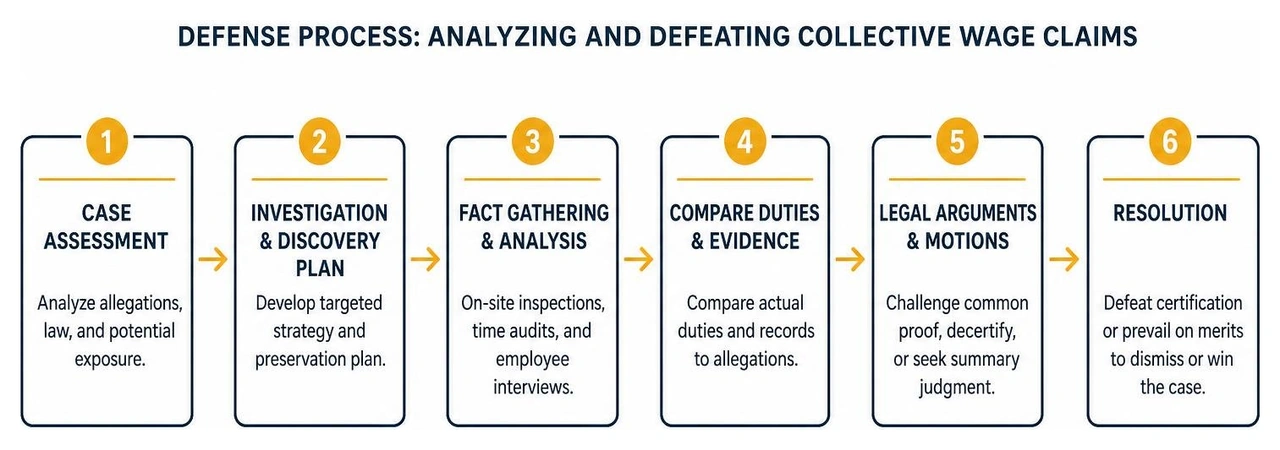
Instead of relying on paperwork, defense attorneys conduct on-site workplace inspections, perform detailed time audits, and conduct extensive employee interviews. Their goal is to prove that the employees' duties do not match their allegations of forced off-the-clock work or missed breaks, preventing the case from being certified as a collective action.
If you believe your employer is stealing your wages or retaliating against you for speaking up, consulting a Retaliation Lawyer in Southfield MI early on will help you properly document your hours before the company's defense lawyers start their investigation.
Navigating Modern Workplace Challenges: From COVID-19 to State-Level Protections
The workplace is constantly changing, and the legal challenges facing employees change with it. In recent years, we have seen massive shifts in how companies handle public health crises, pay equity, and diversity initiatives.
For example, the handling of COVID-19-related workplace policies—such as face mask and vaccination mandates—created a wave of litigation. Defense attorneys advised companies on how to draft clear, legally compliant safety policies that could withstand challenges from employees seeking religious or medical exemptions.
Today, as we navigate the post-pandemic landscape in July 2026, the focus has shifted toward proactive corporate audits of pay equity, diversity and inclusion programs, and disability accommodation procedures. While companies use these audits to shield themselves from liability, employees can benefit from these structured policies—provided their employers actually follow them. When they don't, a ELCRA Discrimination Lawyer in Michigan can hold them accountable.
State-Level Protections and the Elliott-Larsen Civil Rights Act
While federal laws provide a baseline of protection, Michigan workers have an incredibly powerful tool at their disposal: the Elliott-Larsen Civil Rights Act (ELCRA). In many ways, Michigan’s state-level protections are broader and more favorable to employees than federal laws.
If you want to understand how this law protects you, our guides on ELCRA 101 Michigan's Civil Rights Law Explained for Employees and ELCRA Explained Michigan's Main Law Against Workplace Discrimination break down the essentials.
Under the ELCRA, discrimination based on race, religion, color, national origin, age, sex, height, weight, familial status, or marital status is strictly illegal in Michigan. If you have been fired for any of these reasons, you may have a strong claim for wrongful termination. You can learn more about your options by reading our resource on Wrongful Discharge Michigan.
Frequently Asked Questions about Civil Rights in the Workplace
Navigating a hostile or discriminatory workplace is incredibly stressful. Here are answers to some of the most common questions we hear from Michigan workers.
What laws govern employment discrimination and wage disputes?
Employment disputes are generally governed by a combination of federal and state laws:
- Title VII of the Civil Rights Act of 1964: Federal law prohibiting discrimination based on race, color, religion, sex, and national origin.
- The Americans with Disabilities Act (ADA): Federal law requiring reasonable accommodations for qualified employees with disabilities.
- The Fair Labor Standards Act (FLSA): Federal law governing minimum wage, overtime pay, and child labor standards.
- Michigan's Elliott-Larsen Civil Rights Act (ELCRA): State law providing broad protections against discrimination, harassment, and retaliation.
If your employer has created an intolerable work environment, you should speak with a Hostile Work Environment Attorney in Royal Oak MI to determine which laws apply to your situation.
What constitutes a reasonable accommodation under the ADA?
Under the ADA, a reasonable accommodation is any change in the work environment or the way things are usually done that enables an individual with a disability to enjoy equal employment opportunities. Examples include:
- Modifying work schedules or providing part-time options
- Acquiring or modifying equipment or devices
- Providing qualified readers or interpreters
- Adjusting or modifying examinations, training materials, or policies
Employers are required to engage in an "interactive process" with you to find a suitable accommodation. However, they are not required to provide an accommodation if it causes them "undue hardship" (significant difficulty or expense).
How can employees document harassment or retaliation before seeking an attorney?
If you are experiencing harassment or retaliation, documenting the behavior immediately is the single most important thing you can do to help your case:
- Keep a detailed, written log: Record dates, times, locations, who was involved, what was said or done, and any witnesses. Keep this log on your personal phone or notebook—never on a work computer.
- Save physical evidence: Save emails, text messages, performance reviews, and any written notes. Print them out or forward them to your personal email if your company policy allows.
- Report the behavior in writing: Follow your company’s handbook for reporting harassment. Use written communication (like email) so there is a clear paper trail showing that management was notified.
- Do not quit immediately: Quitting can make it harder to prove wrongful termination or constructive discharge. Consult an attorney before making any sudden moves.
Conclusion
Facing discrimination, harassment, or a hostile work environment can make you feel completely powerless. But you don't have to go through it alone.
At Scott Batey Law, we provide award-winning, personalized representation backed by nearly 30 years of experience fighting for workers across Michigan. Based in Bingham Farms, MI, we proudly serve clients in Birmingham, Southfield, Royal Oak, Troy, Detroit, and throughout Oakland County. We know the tactics corporate defense teams use, and we know how to beat them.
If you are ready to stand up for your rights under Michigan law, explore our services on Workplace Discrimination ELCRA and contact us today to schedule your consultation. Let us help you get the justice and peace of mind you deserve.