
Need an Employment Attorney in Grand Rapids to Defend Your Rights?

When to Contact an Employment Attorney in Grand Rapids
If you were fired, demoted, harassed, denied leave, or punished after reporting workplace misconduct, speak with an employment attorney in Grand Rapids as soon as possible. An attorney can review the facts, identify deadlines, help preserve evidence, and explain whether Michigan or federal law may protect you.
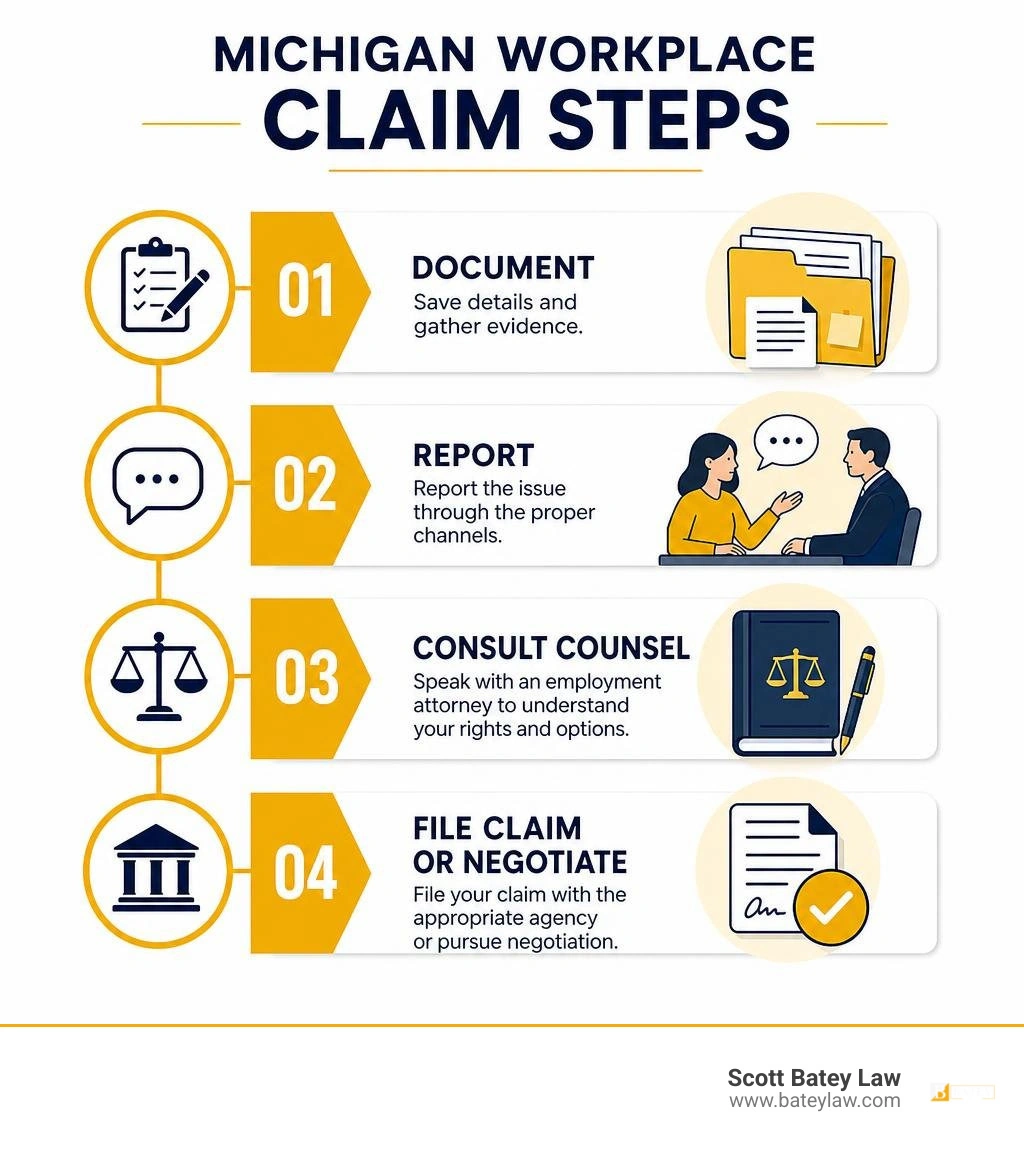
Before a consultation, save relevant emails, texts, performance reviews, pay records, your employee handbook, and a dated timeline of what happened. Do not sign a severance agreement, release, or restrictive-covenant agreement without understanding what rights you may be giving up.
Michigan is generally an at-will employment state, but an employer cannot lawfully fire or retaliate against a worker for certain protected reasons. Claims may involve discrimination, sexual harassment, disability accommodations, unpaid wages, whistleblower retaliation, family or medical leave, or a wrongful termination that violates a contract or public policy. Deadlines can be short, especially for agency complaints.
I am Scott Batey, a Michigan employment lawyer who has represented employees in workplace disputes since 1996. As an employment attorney Grand Rapids workers can consult for employee-side guidance, I help people assess their options, protect key evidence, and pursue practical solutions when workplace conduct crosses the line.
Understanding Your Rights: When to Hire an Employment Attorney in Grand Rapids
Facing turbulence at work can leave you feeling isolated. Employers often have dedicated human resources departments, corporate risk managers, and defense attorneys advising them behind the scenes. When workplace conduct crosses legal boundaries, partnering with an experienced Michigan Employment Lawyer for Employees helps level the playing field.
We regularly see situations where workers wait too long to seek guidance because they hope an internal issue will simply blow over. You should consider reaching out to an attorney if you encounter:
- Workplace Retaliation: Adverse actions taken against you after you engage in protected activity, such as reporting wage violations, safety hazards, or discrimination.
- Whistleblower Issues: Punishment or termination for reporting suspected illegal activity to a public body.
- Constructive Discharge: Working conditions made so intolerable through harassment or hostility that any reasonable person would feel forced to resign.
- Hostile Work Environment: Pervasive, severe harassment based on a protected characteristic that interferes with your ability to perform your job.
- Severance Negotiation: Being presented with a complex separation package loaded with non-compete clauses, non-disparagement covenants, and liability releases.
Signs You Need an Employment Attorney in Grand Rapids for Wrongful Termination
Wrongful termination does not simply mean an unfair firing. In Michigan, unlawful termination occurs when the firing violates specific state or federal statutes, public policy, or an established employment agreement.
Key red flags pointing to an actionable wrongful termination claim include:
- Retaliation Following Protected Complaints: Firing an employee shortly after they request medical leave under the FMLA, report harassment, or file a workers' compensation claim.
- Public Policy Violations: Dismissing a worker for refusing to commit an illegal act on behalf of the company or for fulfilling a statutory duty like jury service.
- Breach of Contract: Terminating an employee who has an express written contract requiring "just cause" or violating clear progressive discipline provisions.
- Pretextual Documented Misconduct: Fabricating negative performance reviews or suddenly enforcing minor rules against only one employee to justify a predetermined dismissal.
Workplace Harassment and Protected Class Discrimination Under ELCRA
Michigan workers enjoy substantial civil rights protections under the Elliott-Larsen Civil Rights Act (ELCRA) as well as federal statutes like Title VII of the Civil Rights Act of 1964. Under Michigan law, employers cannot make employment decisions based on religion, race, color, national origin, age, sex, height, weight, familial status, or marital status. Additionally, the Persons with Disabilities Civil Rights Act (PWDCRA) protects workers requiring reasonable accommodations.
Whether dealing with subtle age discrimination, gender pay disparities, or overt racial harassment, these laws prohibit discriminatory practices in hiring, compensation, promotion, and termination.
Key Michigan Employment Laws Governing Grand Rapids Workers
Navigating workplace law requires understanding both broad statutory frameworks and nuanced state-level provisions.

- At-Will Employment Doctrine: Under Michigan common law, employment is presumed to be at-will, meaning either party can end the working relationship at any time for any legal reason. However, this rule does not give employers free rein to fire workers for discriminatory or retaliatory reasons.
- Bullard-Plawecki Employee Right to Know Act: Michigan law allows workers to review their personnel files upon written request. This includes performance reviews, disciplinary notices, and records used to determine promotions or compensation.
- Wage and Hour Protections: Workers are protected under Michigan's Improved Workforce Opportunity Wage Act alongside the federal Fair Labor Standards Act (FLSA), ensuring proper minimum wage payments, overtime compensation for non-exempt roles, and protections against unlawful wage deductions.
- Non-Compete and Restrictive Covenants: Michigan enforces non-compete agreements only if they protect a reasonable business interest and remain reasonable in geographic scope, duration, and the nature of the restricted work.
Critical Differences Between Michigan State and Federal Workplace Statutes
State and federal workplace laws overlap frequently, but key differences dictate where and how a case should be pursued.
| Legal Concept | Michigan State Law (ELCRA / PWDCRA / State Statutes) | Federal Law (Title VII / ADA / ADEA / FLSA) |
|---|---|---|
| Protected Categories | Covers race, sex, age, disability, plus height, weight, and marital status. | Covers race, sex, age (40+), disability, national origin, and religion; does not cover height, weight, or marital status. |
| Employer Size Threshold | Applies to employers with 1 or more employees under ELCRA. | Title VII/ADA require 15+ employees; ADEA requires 20+ employees. |
| Administrative Filing | Direct court access available under ELCRA without mandatory administrative exhaustion. | Requires filing a charge with the EEOC before filing a lawsuit in court. |
| Statute of Limitations (Discrimination) | 3-year statutory window for direct civil claims under ELCRA. | 300 days to file an administrative charge with the EEOC in Michigan. |
| Whistleblower Protections | Whistleblowers' Protection Act (WPA) covers reports to public bodies (strict 90-day filing limit). | Various sector-specific federal whistleblower statutes (OSHA, SOX, etc.). |
What to Expect When Consulting an Employment Attorney in Grand Rapids
When you meet with our firm, the consultation process begins with a detailed case evaluation. We review timelines, internal communications, and your employment record to assess liability and damages.
From there, we may engage in Employment Law Without Prejudice Discussions to negotiate early resolutions with your employer before escalating to court. If the employer refuses to address the unlawful conduct fairly, our strategy shifts toward drafting a formal settlement demand, filing administrative complaints, or advancing toward trial representation in state or federal court.
Steps to Take Before Filing a Workplace Claim in West Michigan
Proper preparation makes a significant difference in the outcome of an employment dispute. Taking deliberate steps before taking legal action helps build a solid factual record.

- Request Your Personnel File: Submit a formal written request under the Bullard-Plawecki Act to obtain your complete personnel record.
- Log Every Incident: Maintain a personal, dated journal detailing incidents of harassment, discriminatory remarks, or retaliatory actions. Note who was present and what was said.
- Preserve External Documentation: Secure copies of offer letters, pay stubs, bonus plans, benefit paperwork, and performance evaluations that are already in your possession.
- Follow Internal Reporting Procedures: Report unlawful conduct through the formal HR channels outlined in your employee handbook so the company has documented notice of the issue.
- Keep Personal Communications Off Company Devices: Never use your work email, company-issued laptop, or employer-monitored phone to communicate with an attorney or discuss your legal rights.
Gathering Evidence and Documenting Unlawful Conduct
Direct proof of discrimination or retaliation is rare; employers seldom state illegal motives openly. We rely heavily on circumstantial evidence to build a case:
- Performance Evaluations: Consistent positive reviews that contradict an employer's sudden claim of "poor performance."
- Email Archives and Text Messages: Communications demonstrating disparate treatment, abusive conduct, or sudden hostility following a protected report.
- Company Policies and Handbooks: Written disciplinary guidelines that show the employer bypassed standard progressive discipline steps.
- Comparative Evidence: Examples of coworkers outside your protected class who engaged in similar conduct but faced no discipline.
- Witness Statements: Contact information for former colleagues who witnessed the misconduct firsthand.
Filing with the EEOC, MDCR, and Kent County Courts
Depending on the underlying claims, pursuing legal action may require navigating multiple administrative bodies and judicial forums:
- Michigan Department of Civil Rights (MDCR): Handles state-level discrimination complaints and works cooperatively with federal agencies.
- Equal Employment Opportunity Commission (EEOC): Investigates federal civil rights violations and issues "Right to Sue" notices required before bringing federal Title VII or ADA claims.
- 17th Circuit Court of Kent County: The primary state trial court handling local breach-of-contract, ELCRA discrimination, and Michigan Whistleblowers' Protection Act claims.
- U.S. District Court for the Western District of Michigan: The federal court located in Grand Rapids that hears disputes involving federal employment statutes such as the FLSA, FMLA, Title VII, and the ADA.
Frequently Asked Questions About Employment Law in Grand Rapids
What is the statute of limitations for filing an employment claim in Michigan?
Deadlines vary significantly based on the statute governing your claim:
- Elliott-Larsen Civil Rights Act (ELCRA): 3 years from the date of the adverse action to file a lawsuit directly in court.
- EEOC Federal Discrimination Charges: 300 days in Michigan to submit an administrative charge.
- Michigan Whistleblowers' Protection Act (WPA): 90 days from the date of the violation.
- Fair Labor Standards Act (FLSA Wage Claims): 2 years for standard wage claims; 3 years for willful violations.
- Breach of Written Employment Contract: 6 years under Michigan common law.
Can I be fired without cause under Michigan at-will employment laws?
Yes, an employer can terminate an at-will employee without cause, notice, or an explanation. However, at-will employment does not shield an employer from liability if the firing was motivated by unlawful discrimination, retaliation for reporting safety or wage violations, refusing to break the law, or taking protected medical leave.
How do Grand Rapids courts handle employment law disputes?
Employment lawsuits filed in the 17th Circuit Court or the Western District of Michigan follow structured litigation phases. Courts frequently order parties to participate in alternative dispute resolution (ADR), including case evaluation or facilitative mediation. If the parties cannot reach a negotiated settlement during mediation conferences, the matter moves forward through discovery, dispositive motions, and formal jury or bench trials.
Conclusion
Navigating a difficult workplace dispute can disrupt your career, financial security, and personal well-being. Having an award-winning advocate who understands Michigan workplace law ensures your voice is heard and your civil rights remain protected. As dedicated Batey Law Local Employee-Side Counsel, we have spent over 25 years fighting exclusively for workers facing wrongful termination, discrimination, and retaliation.
To review your situation and understand your legal options, reach out to the Scott Batey Law Firm today.