.png)
Using Michigan Earned Sick Time During Flu Season: Notice, Documentation, Retaliation
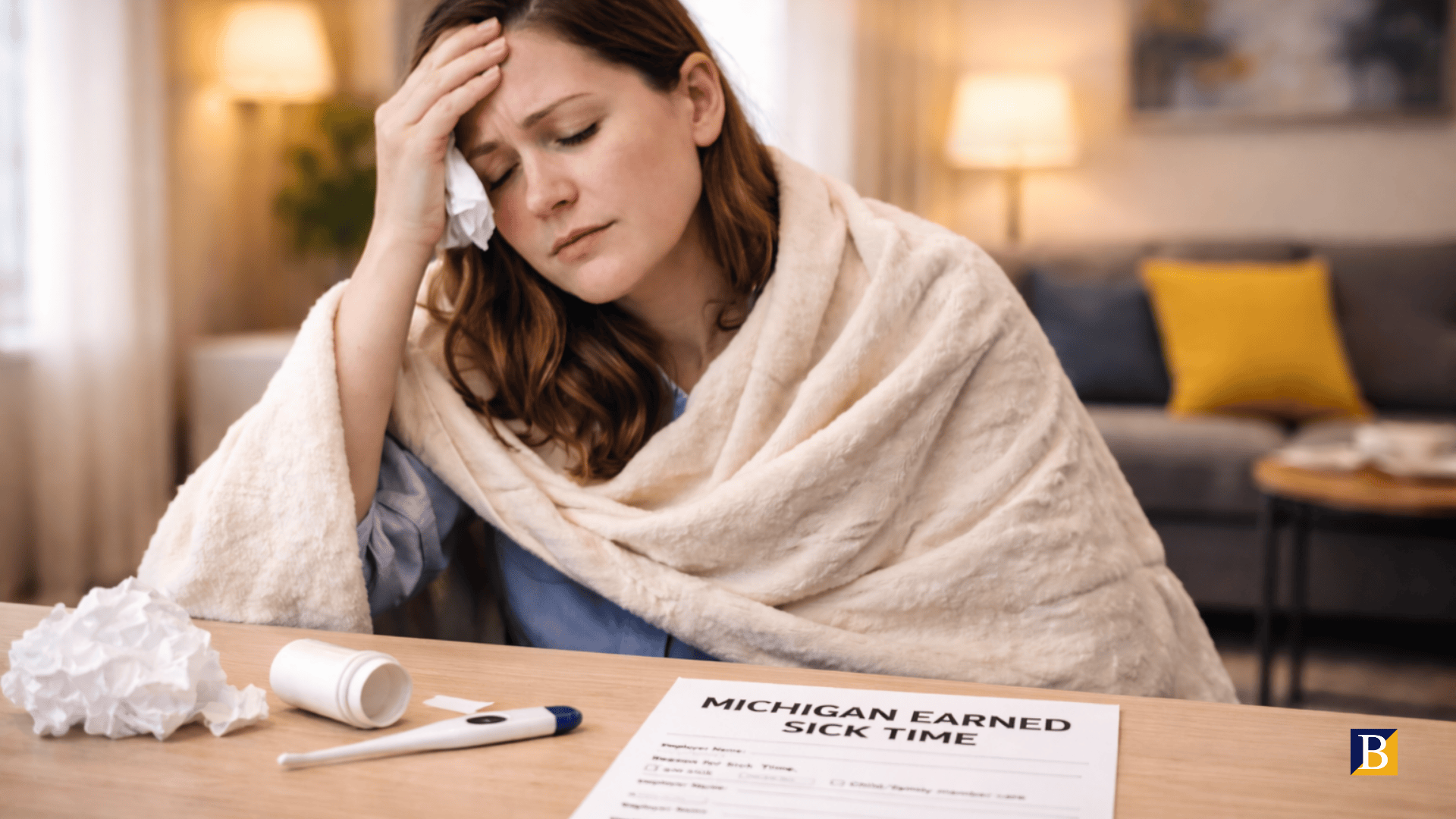
Flu season reliably brings more than coughs and fevers—it brings workplace tension. As absences rise, many employers tighten attendance policies, scrutinize call-ins, and quietly discourage employees from staying home, even when they’re sick.
At the same time, employees often feel trapped. They worry that calling in sick will lead to discipline, lost hours, or being labeled “unreliable.” In many workplaces, people show up ill not because they want to—but because they’re afraid of what will happen if they don’t.
That fear is exactly why disputes over sick time increase every winter. The law gives employees protections, but those protections only work if employees understand them before they pick up the phone to call in sick. Knowing your rights ahead of time can prevent a routine flu absence from turning into a disciplinary problem—or worse.
Michigan Earned Sick Time: The Legal Framework
Michigan law provides employees with the right to earn and use paid sick time under the Earned Sick Time Act. This is not a company benefit or a discretionary policy—it is a statutory requirement for covered employers.
Under the law, eligible employees accrue sick time based on hours worked and may use that time for qualifying reasons. Importantly, the law applies broadly. Many employees mistakenly believe it only protects full-time workers or only applies to large companies. That’s not true.
Coverage generally includes:
- Full-time employees
- Part-time employees
- Hourly employees
Some categories of workers may be excluded depending on job classification or employer size, but the default assumption should be coverage—not exclusion.
Accrual rules and usage thresholds determine how much time you earn and when you can use it, but once earned, that time belongs to you. Employers may regulate how sick time is requested within limits—but they cannot eliminate the right itself.
What Earned Sick Time Can Be Used For
Michigan earned sick time is not limited to dramatic illnesses or hospitalizations. The law intentionally covers everyday health needs—especially those that arise during flu season.
Earned sick time may be used for:
- Your own illness, injury, or health condition, including flu symptoms
- Caring for a sick family member, such as a child or spouse
- Preventive care, including doctor visits and medical appointments
- Public health emergencies, including school or daycare closures related to health concerns
Flu symptoms clearly qualify. You do not need to be bedridden or hospitalized to use earned sick time. If you are ill, contagious, or seeking care related to flu-like symptoms, the law protects your right to stay home.
Problems often arise when employers second-guess whether an illness is “serious enough.” The statute does not give employers that discretion. Once sick time is earned and used for a qualifying reason, discipline or denial of use can cross the legal line.
Notice Requirements: What Employees Must (and Don’t) Have to Do
Foreseeable vs. Unforeseeable Absences
Michigan law distinguishes between absences you can plan for and those you can’t.
- Foreseeable absences (like a scheduled medical appointment) may require advance notice when practicable.
- Unforeseeable absences—such as waking up with flu symptoms—do not require advance notice.
Flu-related illnesses are almost always unforeseeable. You cannot give notice before you know you’re sick. The law recognizes this reality.
Employers may request notice as soon as practicable, but they cannot penalize you for failing to predict illness.
Acceptable Forms of Notice
Employees are generally allowed to provide notice by:
- Calling
- Texting
- Emailing
- Using an employer’s call-in or scheduling system
Problems arise when employer policies conflict with the statute. If a policy demands notice in a way that is unreasonable or impossible under the circumstances, the law controls—not the handbook.
Employer Overreach on Notice
Common overreach includes:
- Claiming a call-in was “too late” when it was given as soon as practicable
- Enforcing rigid timing rules that don’t allow for sudden illness
- Disciplining employees solely because notice was given by text instead of phone
Discipline based only on how notice was given—rather than whether notice was reasonable—can violate Michigan law.
Documentation Rules: When Employers Can Ask for Proof
When Documentation Is Allowed
Employers may generally request documentation only if the absence lasts three consecutive days or more. Even then, the request must be reasonable.
Short absences—one or two days—typically do not require medical documentation.
What Counts as Documentation
Acceptable documentation can include:
- A doctor’s note confirming a visit
- Clinic or urgent-care confirmation
- Public health notices related to closures or outbreaks
The documentation only needs to confirm that sick time was used for a qualifying reason—not the specifics of the illness.
What Employers Cannot Demand
Employers may not require:
- Diagnosis details
- Descriptions of symptoms
- Medical records
- Documentation for short absences
Requests for confidential medical information often cross the legal line and can create separate violations.
Attendance Policies vs. Earned Sick Time
Point Systems and “No-Fault” Attendance Policies
Employers often use point systems or so-called “no-fault” attendance policies where every absence counts the same, regardless of reason. While these systems may be lawful in general, they cannot override earned sick time rights.
Using earned sick time is not an attendance violation.
Why Sick Time Cannot Be Counted as an Occurrence
Under Michigan law, employers may not:
- Assign points for using earned sick time
- Count sick time as an “occurrence”
- Use sick leave as a basis for discipline
If you properly use earned sick time for a qualifying reason, it must be treated as protected time, not an attendance infraction.
Common Policy Language That Violates Michigan Law
Red-flag policy language includes:
- “All absences count, regardless of reason”
- “Sick time still results in attendance points”
- “Patterns of sick leave will result in discipline”
Even if this language appears in a handbook, it does not make it legal. Policies must comply with the statute—not the other way around.
Retaliation: The Biggest Legal Risk for Employers
The most serious legal exposure for employers during flu season isn’t notice or documentation—it’s retaliation.
What Retaliation Looks Like
Retaliation occurs when an employer takes negative action because an employee used earned sick time. Common examples include:
- Discipline or write-ups shortly after sick leave
- Reduced hours or unfavorable schedule changes
- Negative performance evaluations tied to absences
- Termination following sick time use
Retaliation doesn’t have to be dramatic to be unlawful. Subtle actions count.
Timing as Evidence
Timing is often the strongest evidence in retaliation cases.
When discipline closely follows sick leave, it raises questions:
- Why now?
- What changed?
- Were others treated the same way?
Patterns matter. If employees who use sick time face consequences—and those who don’t are left alone—that disparity can be powerful evidence.
Subtle Retaliation Tactics
Not all retaliation looks obvious. Watch for:
- “Attendance warnings” after lawful sick leave
- Increased scrutiny of work after absences
- Loss of preferred shifts, overtime, or opportunities
Employers sometimes frame these actions as “business decisions,” but timing and consistency often tell a different story.
What Employees Should Document If Problems Arise
When sick-time issues start to feel tense—or disciplinary—you should begin documenting immediately. These records often determine whether a dispute can be resolved or escalates into something more serious.
Employees should preserve:
- Sick time requests and approvals, including dates, times, and how notice was given
- Employer responses, especially emails or messages questioning the absence
- Payroll records showing whether sick time was paid correctly
- Discipline, warnings, or write-ups issued after sick leave
- Comparator evidence, such as coworkers who used sick time without consequence
Documentation doesn’t need to be complicated. A simple timeline that shows what happened before and after sick time was used can be powerful evidence—particularly when retaliation is subtle.
Using Sick Time Shouldn’t Make You Sick With Worry
Earned sick time is a legal right, not a favor and not something you should fear using. Yet flu season often exposes deeper workplace problems—rigid attendance policies, payroll shortcuts, or retaliation against employees who assert their rights.
In these cases, small details matter. How notice was given, when discipline occurred, and what was documented often decide whether a dispute ends quietly or turns into termination.
Getting advice early—before warnings escalate or pay is withheld—can prevent minor sick-time issues from becoming career-altering events.
Contact Batey Law
If your employer disciplined you, denied pay, or retaliated against you for using earned sick time, it’s important to understand your rights under Michigan law.
Batey Law Firm, PLLC
30200 Telegraph Rd., Suite 400
Bingham Farms, MI 48025