.png)
Using Michigan ESTA Without Risk
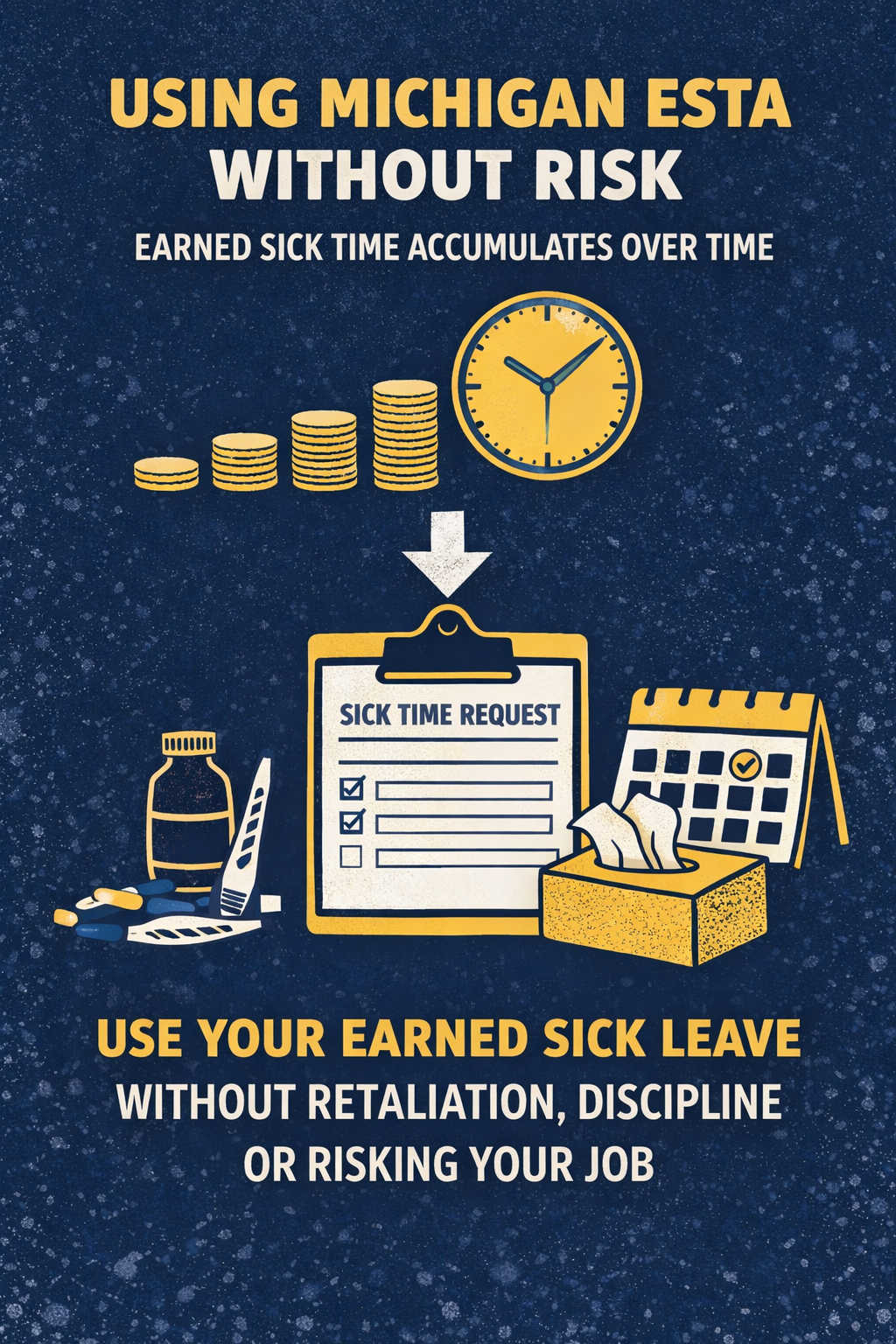
Early January is the busiest—and most stressful—weeks of the year. It’s also when Michigan workers most commonly need sick leave. Flu season peaks, kids bring home viruses from holiday gatherings, and schools or daycares close unexpectedly due to weather or illness.
And some employers illegally push back—suggesting workers “find coverage,” “wait until after the holidays,” or “don’t call in unless it’s life or death.” These tactics violate Michigan law.
Understanding your rights under Michigan’s Earned Sick Time Act (ESTA)—and documenting your absences correctly—allows you to use the sick time you’ve earned without risking your job.
For more than 25 years, Batey Law has protected Michigan workers from discipline, retaliation, and wrongful termination tied to medical leave. Batey Law IS Employment Law, and we make sure employers follow the rules.
Michigan’s Earned Sick Time Act (ESTA): What It Really Guarantees
Who Is Covered Under ESTA
Most workers in Michigan fall under ESTA, including:
- Full-time employees
- Part-time employees
- Temporary or seasonal workers (depending on employer size)
- Workers in retail, healthcare, hospitality, manufacturing, education, childcare, and more
If you earn wages in Michigan, you likely earn protected sick time.
Reasons You Can Use Earned Sick Time
ESTA covers far more than personal illness. You can use earned sick time for:
- Your own illness (flu, COVID, winter viruses, respiratory infections)
- Caring for a sick child, spouse, parent, or immediate family member
- Medical appointments that can’t be scheduled outside the holiday period
- Mental health symptoms that interfere with work
- School or daycare closures due to illness or severe weather
These protections apply even during high-demand holiday scheduling.
The “Holiday Blackout Period” Myth
Many Michigan employers tell workers they cannot call in sick during:
- Blackout dates
- High-volume holiday weeks
- Mandatory overtime periods
- Peak seasonal scheduling
But blackout dates do NOT override state law.
Under ESTA:
- Employers cannot block employees from using earned sick time during holiday weeks.
- Employers cannot discipline or retaliate against workers for protected absences—even during peak business hours.
- Workers remain protected regardless of schedule demands.
How Much Sick Time You Have — and How It Accrues
Accrual Basics
Michigan workers earn sick time as they work. Typically:
- Sick time accrues based on hours worked (for example, 1 hour earned for every 30 hours worked).
- Employers must allow unused sick time to carry over into the new year, subject to annual usage caps.
- Sick time is not required to be paid out at the end of the year (a common misconception).
If you’ve worked consistently throughout the year, you may have more sick time available than you realize.
Using Sick Time in Increments
Michigan law allows sick time to be used in reasonable increments, which means:
- Employers generally must allow partial-day usage, not force full-day absences.
- You can take 1–2 hours for a doctor’s appointment or only part of a shift if symptoms improve.
- Employers cannot require you to burn an entire 8-hour shift unless your policy already requires full-day increments for all leave types.
If your workplace is trying to “force” full-day sick leave around the holidays, that policy may violate ESTA.
Documentation Requirements
Under ESTA, employers can only ask for documentation in limited situations:
- If you miss three consecutive days
- If the absence raises legitimate questions (not just suspicion due to holiday timing)
Important limits include:
- Employers cannot demand a doctor’s note for single-day flu, stomach virus, or childcare needs.
- If medical offices are closed during the holidays, employers must allow alternative documentation, such as patient instructions or an after-hours visit summary.
Documentation should be reasonable and cannot be used as a tool for intimidation.
Holiday-Specific Scenarios Michigan Workers Should Prepare For
Calling Out Sick During Holiday Rush Weeks
How to Notify Your Employer Correctly
To stay protected under ESTA, notify your employer as soon as practicable. This means:
- Calling or messaging as early as possible
- Following normal call-in procedures (phone, email, or HR portal)
- Providing a brief explanation—“I’m sick and using earned sick time”
You do not have to overshare medical details.
Best Practices for Same-Day Absences
- Notify before your shift starts, when possible
- Keep a screenshot or record of your message
- Log your symptoms and date
- Save all employer responses
These steps help establish credibility, especially when employers push back because of holiday timing.
Child or Family Illness Post-Holiday Gatherings
It’s extremely common for kids and relatives to get sick after family events. ESTA explicitly protects caregiver leave, meaning:
- Caring for a sick child
- Staying home with a spouse or parent who is ill
- Providing care after exposure or flu symptoms
- Staying home due to weather- or illness-related school/daycare closures
How to Document for Credibility
- Note symptoms
- Record dates and times
- Save school or daycare notices
- Track doctor visits or after-hours care
- Keep screenshots of closure alerts
Simple personal logs can make a major difference.
Employers Who Question the Timing
Some employers become skeptical—or aggressive—when absences happen near Christmas or New Year’s. You may hear:
- “You always call off around Christmas.”
- “We don’t allow holiday sick time.”
- “I need proof this is real.”
How to Respond
Politely but firmly remind them:
“I’m using earned sick time, which is protected under Michigan law.”
If your employer pressures or threatens you, document the interaction.
Mandatory Overtime & Holiday Scheduling Conflicts
Holiday staffing shortages often lead to mandatory overtime. Many workers worry they’ll be disciplined if they can’t work the extra hours.
Here’s the truth:
ESTA Can Override Mandatory Overtime
If you’re sick—or caring for a sick family member—you can take earned sick time even during:
- Mandatory OT
- Peak holiday shifts
- Scheduling “blackout” periods
- “Everyone must work” days
When ESTA Protects You From Discipline
- If you follow notice requirements
- If your absence qualifies under ESTA
- If your employer tries to discipline you for missing OT due to illness
Employers cannot punish you for taking legally protected sick time—even if the timing is inconvenient for them.
Using ESTA Without Risk: Protecting Yourself the Batey Law Way
Document Your Illness or Care Responsibilities
You don’t need perfect medical records. You simply need credible notes.
Document:
- Symptoms (for you or your family)
- Dates and times
- Treatment notes or after-hours visits
- Daycare or school closure notices
- Employer responses to your call-offs
Even a simple personal log strengthens your legal protection.
Follow the Employer’s Notice Procedure—But Know Your Rights
ESTA requires workers to give notice as soon as practicable.
But remember:
- You do NOT need to call in hours early if symptoms appear suddenly
- You do NOT need to jump through unreasonable hoops
- During emergencies, delays are understandable and legally protected
If your employer insists on overly burdensome steps—like calling a manager who never answers—that may violate ESTA.
Watch for Retaliation
Illegal retaliation often starts quietly. Watch for sudden changes after a protected sick leave, including:
- Write-ups
- Attendance points
- Loss of holiday pay
- Reduced hours
- Shift changes
- Exclusion from meetings
- “Attitude” complaints
- Termination for “abuse of time off”
All of these may point to illegal retaliation under Michigan law.
Retaliation Often Happens Quietly
Harassment and retaliation rarely start with a formal accusation. Instead, they show up as:
- Being scheduled only for undesirable or overnight shifts
- Sudden performance reviews after years of good work
- Negative comments about “reliability”
- Managers micromanaging or nitpicking everything you do
Batey Law evaluates these patterns using a timeline-based method that reveals the true cause-and-effect behind employer behavior.
Your Health Comes First. Your Job Shouldn’t Punish You for It.
Michigan law gives you the right to take sick time when you or your family need it—especially during the holidays, when illness spreads quickly and childcare disruptions are common. If your employer intimidates you, disciplines you, or retaliates against you for using earned sick time, you don’t have to navigate it alone.
Your health matters. Your rights matter. And your job cannot punish you for taking care of yourself.
Get the Advocacy You Deserve
Since 1996, Scott Batey has represented Michigan workers facing wrongful termination, retaliation, and leave violations. When your sick time is questioned or punished, you need an advocate who is strategic, measured, and relentless in protecting your rights.
📞 Call: 248-540-6800
📍 Office: 30200 Telegraph Rd., Suite 400
Bingham Farms, MI 48025
🌐 Website: www.bateylaw.com
📧 Email: sbatey@bateylaw.com