
Find Experienced Discrimination Lawyers Near You

When to Talk to a Discrimination Lawyer
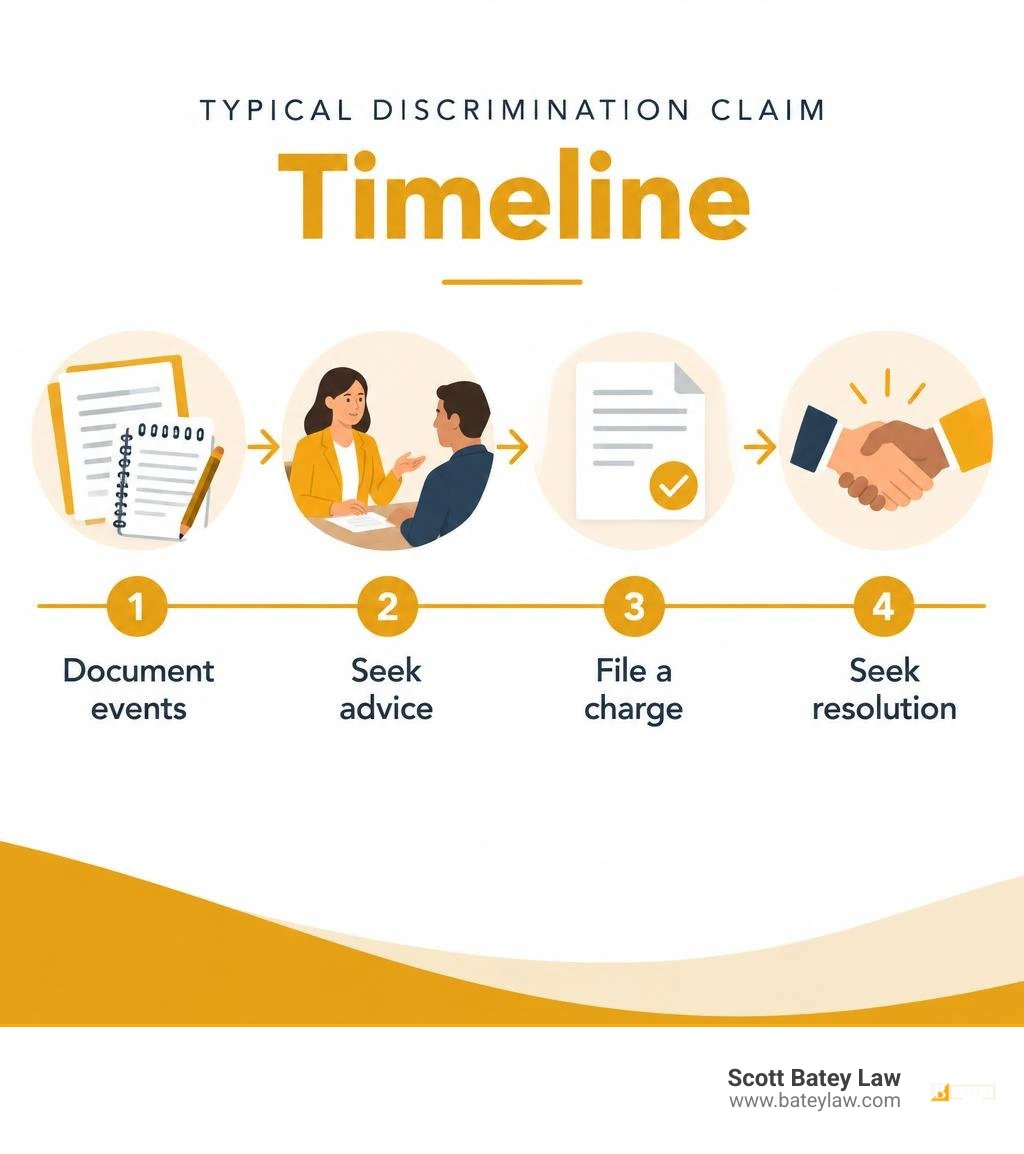
A discrimination lawyer helps workers respond to unfair treatment tied to a protected trait, such as race, disability, age, or sex. If you suspect discrimination or retaliation at work, save relevant messages and reviews, write down what happened and when, and seek legal advice promptly. Filing deadlines can be short.
A lawyer can review your evidence, explain your options, and help you pursue lost pay or other remedies if you have a legal claim.
I'm Scott Batey, a Michigan discrimination lawyer who has represented workers in employment disputes since 1996. At Scott Batey Law in Bingham Farms, I help employees understand their rights and decide what to do next.
Glossary for discrimination lawyer:
Understanding Workplace Bias and When to Hire a Discrimination Lawyer
Workplace bias rarely announces itself with a neon sign. It usually creeps in subtly—an overlooked promotion here, a sudden negative performance review there, or exclusionary remarks masked as office humor. However, when unfair treatment crosses the line into violations of state or federal law, consulting an experienced legal advocate becomes essential.

At Scott Batey Law, we help professionals across Oakland County and the greater Detroit metro area identify unlawful workplace patterns. Employers are legally prohibited from making adverse employment decisions based on protected characteristics. These adverse actions include:
- Termination or constructive discharge (forcing an employee to quit due to intolerable conditions)
- Demotions, pay reductions, or denials of deserved wage increases
- Unwarranted disciplinary actions or sudden negative evaluations following protected activity
- Hostile work environment conditions that management refuses to remedy
To better understand current standards, review our comprehensive Workplace Discrimination Guide 2026, which outlines how systemic bias and employer liability intersect in modern workplaces.
Common Categories of Unlawful Workplace Bias
Discrimination manifests in various forms across different industries. Under federal laws such as Title VII of the Civil Rights Act, the Americans with Disabilities Act (ADA), and the Age Discrimination in Employment Act (ADEA), employees are shielded against several distinct forms of mistreatment:
- Race and National Origin: Race discrimination accounted for 23.7% of all charges filed with the Equal Employment Opportunity Commission (EEOC) in 2021. If you face racial hostility or unequal treatment, speaking with a race discrimination attorney in Royal Oak MI can clarify your protections.
- Disability and Medical Accommodations: Disability claims represented 36.1% of all EEOC charges in 2021. Employers must provide reasonable accommodations unless doing so imposes an undue hardship. A dedicated disability discrimination attorney Michigan worker trust can enforce these accommodation rights.
- Age Bias: Workers over 40 frequently encounter subtle stereotyping, corporate restructuring, or layoffs aimed at replacing senior staff. A seasoned age discrimination lawyer in Birmingham MI can investigate pretextual reasons behind layoffs. Learn more about spotting these trends in age discrimination in Michigan patterns.
- Sex and Pregnancy: Denying leave, demoting pregnant workers, or restricting career advancement violates federal and state statutes. Working with a pregnancy discrimination lawyer Birmingham MI helps secure parental rights.
- Sexual Orientation and Gender Identity: Michigan workers enjoy clear protections against anti-LGBTQ workplace bias. Explore your rights via our overview of LGBTQ discrimination at work in Michigan.
The Pre-Suit Administrative Process and EEOC Charges
Before initiating a lawsuit in federal court under federal civil rights laws, an administrative exhaustion process is mandatory. Approximately 90% of employment discrimination claims pass through the EEOC before any federal civil action can proceed.
In fiscal year 2021, the EEOC received 61,331 charges of workplace discrimination, with retaliation identified as the single most common alleged issue. The median monetary benefit for discrimination charges resolved directly through the EEOC during that period stood at $30,000.
| Stage / Factor | EEOC Administrative Resolution | Federal Court Litigation |
|---|---|---|
| Primary Goal | Investigation, conciliation, and voluntary settlement | Binding legal judgment or formal jury verdict |
| Average Timeline | 6 to 10 months | 12 to 24+ months |
| Filing Requirement | Mandatory pre-requisite for Title VII, ADA, and ADEA | Requires a formal "Right-to-Sue" notice |
| Remedy Scope | Back pay, policy revisions, negotiated monetary settlements | Full compensatory damages, emotional distress, punitive awards |
Once the EEOC concludes its investigation or issues a formal Notice of Right to Sue, employees face strict, non-negotiable windows—often just 90 days—to file a lawsuit in court.
Federal Civil Rights Protections Versus Michigan State Laws
While federal statutes offer critical baselines, Michigan workers often benefit from robust protections under state law. Michigan's premier civil rights statute, the Elliott-Larsen Civil Rights Act (ELCRA), shields employees from discrimination based on race, color, religion, national origin, age, sex, height, weight, familial status, and marital status.

Understanding ELCRA 101 Michigan's Civil Rights Law reveals significant strategic advantages over federal filings. Notably, ELCRA does not require workers to exhaust administrative remedies through the EEOC or the Michigan Department of Civil Rights before filing a direct lawsuit in Michigan circuit courts. For workers in Detroit, Southfield, Troy, and surrounding communities, this direct route can avoid administrative delays.
To review more about the difference between state and federal protections, you can consult ELCRA explained Michigan's main law against workplace discrimination as well as the federal guidelines on how workplace discrimination is illegal.
Proving Unlawful Bias with a Discrimination Lawyer
Employers rarely provide written admissions of unlawful bias. Instead, cases are built on meticulous legal analysis and circumstantial evidence demonstrating pretext—showing that an employer's stated reason for a disciplinary action or firing is false and serves as a cover for bias.
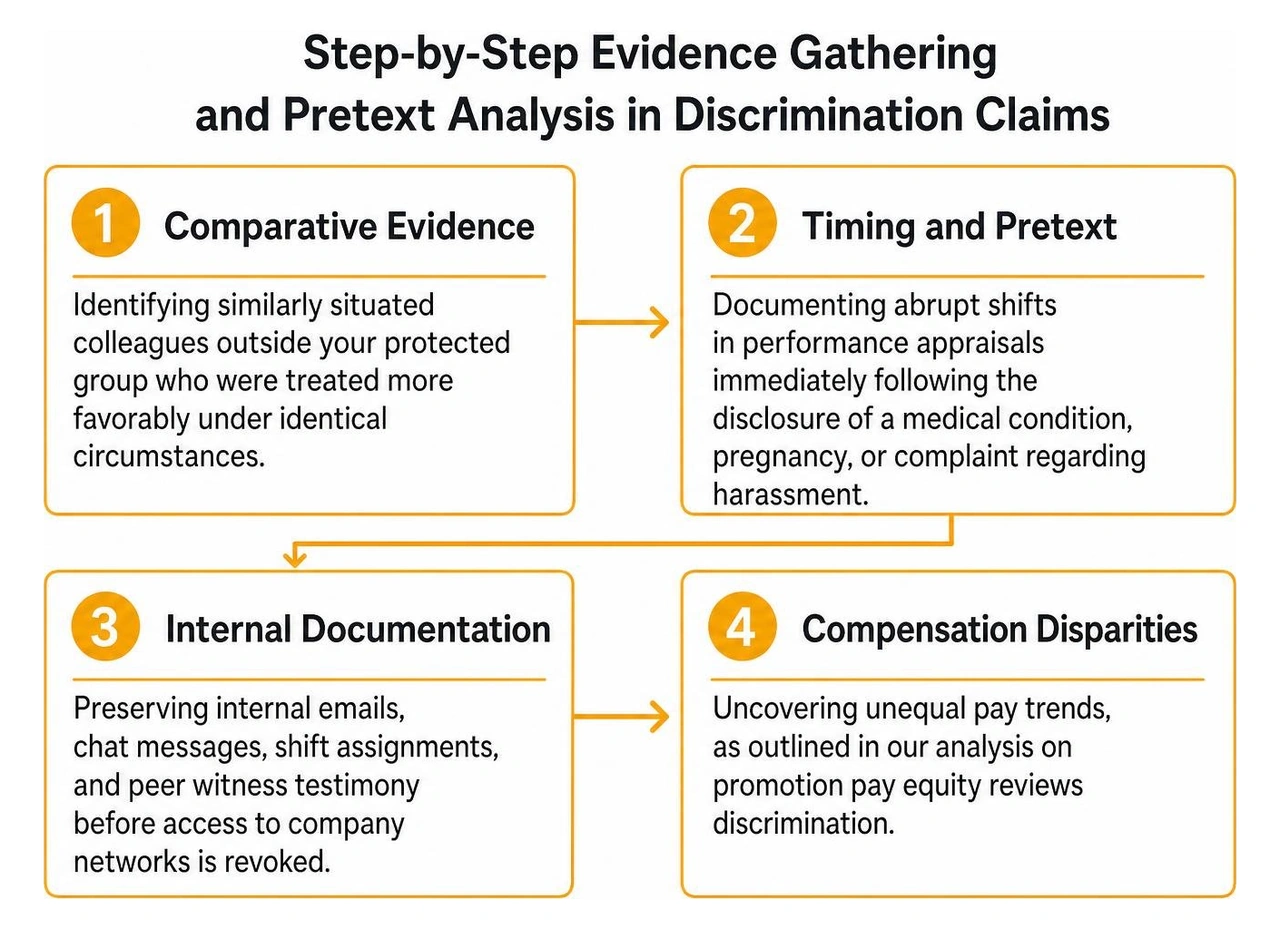
To build a compelling claim, we examine several layers of evidence:
- Comparative Evidence: Identifying similarly situated colleagues outside your protected group who were treated more favorably under identical circumstances.
- Timing and Pretext: Documenting abrupt shifts in performance appraisals immediately following the disclosure of a medical condition, pregnancy, or complaint regarding harassment.
- Internal Documentation: Preserving internal emails, chat messages, shift assignments, and peer witness testimony before access to company networks is revoked.
- Compensation Disparities: Uncovering unequal pay trends, as outlined in our analysis on promotion pay equity reviews discrimination.
Available Financial and Injunctive Remedies for Employees
The objective of employment litigation is to make the employee whole, restoring them financially and professionally to the position they would have occupied had the discrimination not occurred.
Depending on the governing statute, available remedies include:
- Back Pay: Restoring lost wages, bonuses, health insurance contributions, and retirement benefits from the date of the adverse action through the date of resolution.
- Front Pay: Awarding future projected earnings when reinstatement to the previous position is impractical due to workplace hostility.
- Compensatory Damages: Compensating for emotional distress, mental anguish, reputational harm, and loss of enjoyment of life caused by mistreatment.
- Punitive Damages: Punishing egregious, malicious misconduct by employers under federal statutes (subject to statutory limits).
- Injunctive Relief: Court orders mandating policy changes, management training, or the purging of negative disciplinary records.
- Attorney Fees and Costs: Shifting the financial burden of legal fees to the non-compliant employer upon prevailing in court.
Navigating the Legal Consultation and Case Evaluation
Reaching out to a legal professional should not feel intimidating. An initial consultation provides a confidential space to evaluate the strengths and hurdles of your situation.
When partnering with a workplace discrimination lawyer in Bingham Farms MI, our team evaluates your employment history, reviews timeline documentation, and outlines realistic outcomes. We prioritize personalized, responsive representation backed by over 25 years of courtroom experience serving clients across Southfield, Royal Oak, Birmingham, Farmington Hills, and Oakland County.
Key Questions to Ask a Discrimination Lawyer During a Consultation
To ensure you choose the right legal advocate, consider asking the following questions during your case evaluation:
- How many years of direct experience do you have handling employment discrimination and retaliation cases in Michigan courts?
- What are the potential strengths and weaknesses of my specific claim under both state and federal law?
- Will my case be handled directly by an experienced attorney or passed down to junior staff?
- How do you structure legal fees, and do you represent clients on a contingency basis where fees are contingent upon recovery?
- What is the anticipated timeline for resolution, whether through early mediation, administrative filing, or jury trial?
Frequently Asked Questions About Workplace Discrimination Claims
What is the deadline for filing a workplace discrimination claim?
Filing deadlines depend heavily on the statute involved. Under federal law, an EEOC charge must generally be filed within 300 days of the discriminatory incident in Michigan (a state with its own fair employment agency). However, under Michigan's Elliott-Larsen Civil Rights Act, employees typically have three years from the date of the adverse action to file a direct lawsuit in state court. Missing these deadlines can permanently forfeit your right to recover damages.
Can an employer retaliate against an employee for reporting bias?
No. Retaliation is explicitly illegal under Title VII, the ADA, the ADEA, and Michigan's ELCRA. Employers cannot terminate, demote, harass, or reduce the hours of an employee because they opposed illegal bias, filed an internal complaint, or participated in an EEOC investigation. Retaliation claims often succeed in court even if the underlying discrimination claim is dismissed.
What damages can be recovered in a successful discrimination lawsuit?
Successful plaintiffs can recover back wages, future lost earnings, compensation for emotional distress, court costs, and reasonable attorney fees. Under federal law, compensatory and punitive damages are subject to statutory caps ranging from $50,000 to $300,000 depending on company size, whereas Michigan state law provides different avenues for emotional distress damages without identical federal caps.
Conclusion
Workplace discrimination can disrupt your livelihood, career trajectory, and emotional well-being. You do not have to confront an unlawful employer alone. Whether you are dealing with race bias, ageism, disability denial, or retaliation, Scott Batey Law provides the award-winning, personalized advocacy necessary to level the playing field.
If you believe your rights have been violated at work anywhere in Michigan, contact Scott Batey Law today to schedule a confidential consultation. Learn more about your legal avenues and pursue justice under workplace discrimination ELCRA protections.