.png)
Wrongfully Let Go? How to Know If Your Firing Was Illegal

How to Tell If You Were Wrongfully Terminated From Your Job
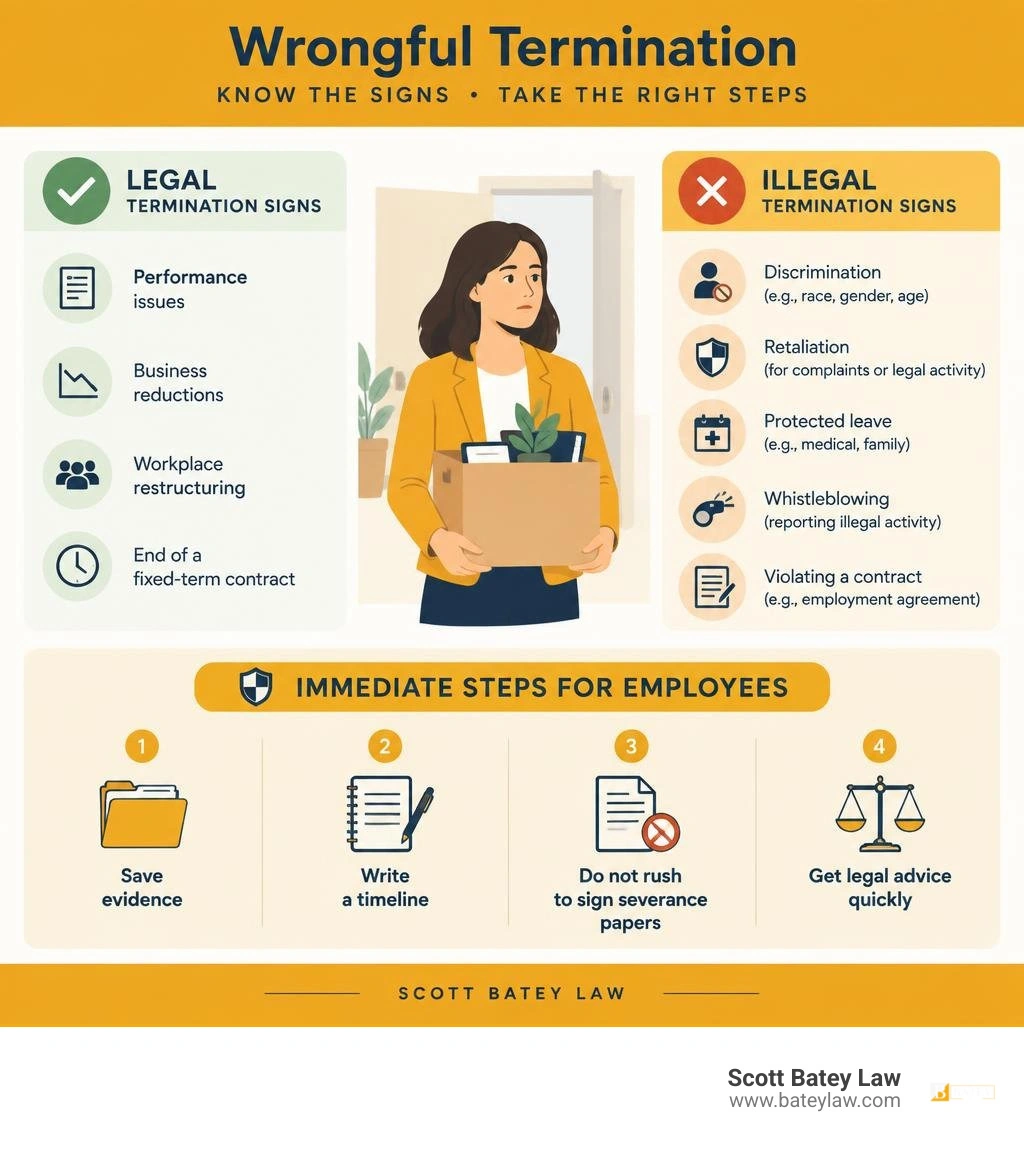
Being wrongfully terminated from a job means you were fired for an illegal reason - not simply a reason that feels unfair. Even in Michigan's generally at-will workplace system, an employer cannot fire you because of discrimination, retaliation, protected leave, whistleblowing, or a contract right.
Start by taking these steps right away:
- Save evidence: Keep your termination notice, emails, texts, reviews, handbook, and records of complaints or leave requests.
- Write a timeline: Note what happened, who was involved, and the dates - especially if you were fired soon after reporting harassment, requesting an accommodation, taking leave, or raising a legal concern.
- Do not rush to sign severance papers: A release may limit your right to bring a claim.
- Get legal advice quickly: Some claims have short filing deadlines. Federal discrimination charges often must be filed with the EEOC within 180 days, though a 300-day deadline may apply in some cases.
A sudden firing does not automatically prove a legal violation. But shifting explanations, a new pattern of discipline after you complained, stronger treatment of similarly situated coworkers, or firing shortly after protected activity can be meaningful warning signs.
I am Scott Batey, a Michigan employment lawyer who has represented employees in workplace disputes since 1996, including matters involving discrimination, retaliation, leave rights, contracts, and being wrongfully terminated from job positions. The sections below explain how to spot a possible illegal firing, protect key evidence, and understand your next options.
Being wrongfully terminated from job word roundup:
What Constitutes Being Wrongfully Terminated from Job Positions?
When workers contact our office in Bingham Farms, they often share an experience that feels fundamentally unfair: a sudden dismissal after years of loyalty, a dispute with a manager over a minor disagreement, or a sudden layoff without warning. While these situations are undeniably frustrating, unfairness alone does not make an employment action illegal under the law.
Legally, wrongful discharge occurs when an employer dismisses an employee in violation of specific federal or state statutes, contrary to an express employment contract, or in violation of clear public policy. The federal government provides comprehensive federal guidance on wrongful termination, emphasizing that employers cannot discharge workers for exercising legal rights or because of protected traits.
State and federal labor frameworks establish definite boundaries around employer discretion. When an employer crosses these boundaries, they expose themselves to legal action. To understand your position, it helps to examine the specific illegal reasons to fire someone, which typically involve discriminatory motives, retaliatory actions, refusal to break the law, or breaches of binding contractual commitments.
At-Will Employment and Statutory Exceptions
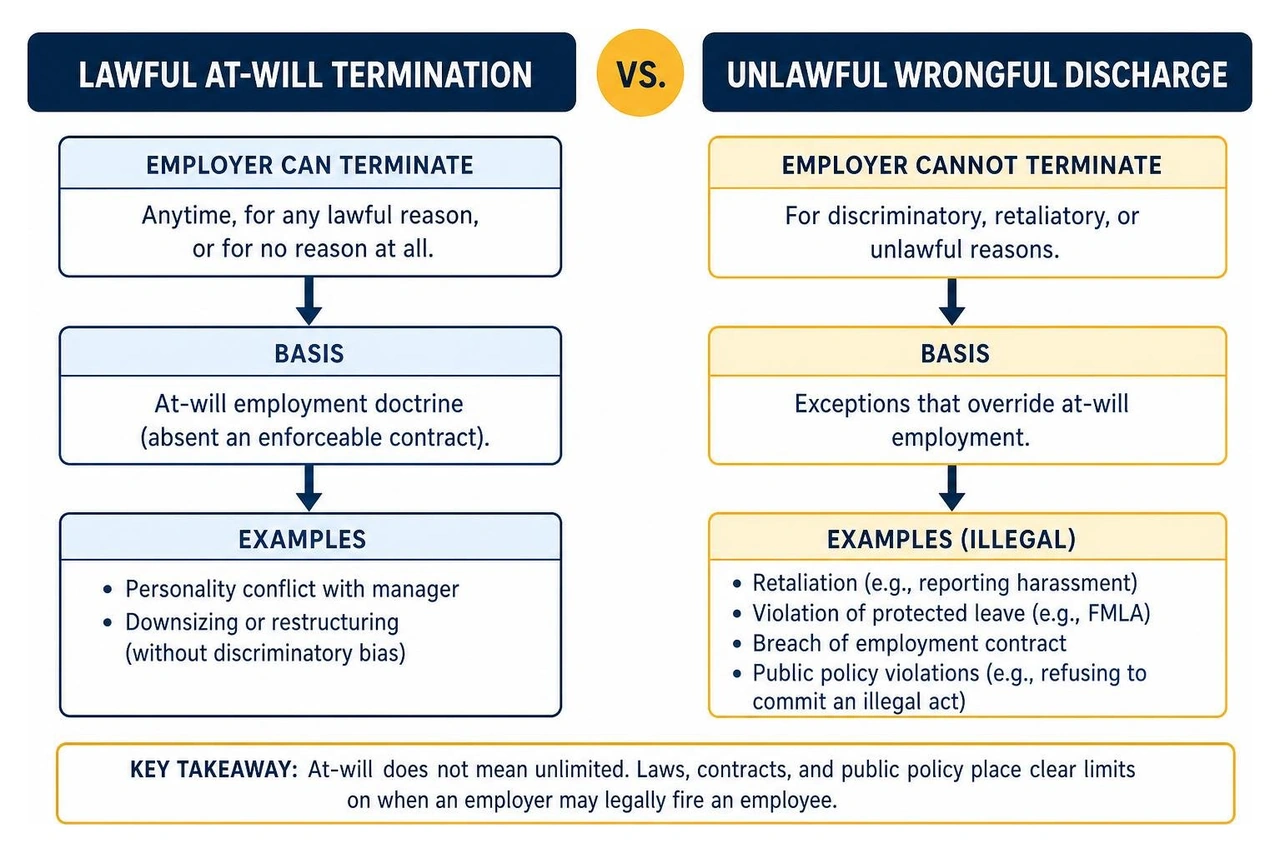
Michigan, like most states, operates primarily under the at-will employment doctrine. In practical terms, this means that absent an enforceable contract, an employer may terminate an employee at any time, for any lawful reason, or for no reason at all. However, "at-will" is not a blank check for employers to act without regard for the law.
Over decades of employment litigation, courts and legislatures have carved out critical exceptions to at-will employment. The three main exceptions include:
- Statutory Prohibitions: Anti-discrimination and anti-retaliation laws override at-will agreements entirely.
- Breach of Contract: If you have an express written agreement, an implied contract created through employer representations, or a collective bargaining agreement requiring "just cause" for dismissal, at-will rules do not apply.
- Public Policy Violations: An employer cannot fire an employee for refusing to commit an illegal act, fulfilling a statutory duty (such as jury duty), or exercising a right granted by statute (such as filing a workers' compensation claim or safety complaint).
To help clarify these distinctions, consider how common workplace terminations are categorized under the law:
| Scenario | Employment Status | Lawful or Illegal? | Legal Basis / Reason |
|---|---|---|---|
| Fired due to personality conflict with manager | At-Will | Lawful | At-will allows dismissal for arbitrary or personal reasons |
| Fired 3 days after reporting racial harassment | At-Will | Illegal | Unlawful retaliation under Title VII and state civil rights laws |
| Fired for downsizing or restructuring | At-Will | Lawful | Legitimate business decision absent discriminatory bias |
| Fired for taking approved medical leave | At-Will | Illegal | Violation of the Family and Medical Leave Act (FMLA) |
| Fired before a 2-year contract term ends without cause | Contract | Illegal | Breach of employment agreement |
| Fired for refusing to falsify company financial records | At-Will | Illegal | Public policy violation (refusal to commit unlawful acts) |
Discrimination, Retaliation, and Protected Leave
Federal statutes like Title VII of the Civil Rights Act, the Americans with Disabilities Act (ADA), and the Age Discrimination in Employment Act (ADEA)—alongside Michigan civil rights protections—prohibit employers from making discharge decisions based on protected characteristics. These characteristics include race, color, religion, sex (including pregnancy, sexual orientation, and gender identity), national origin, age (40 and older), disability, and genetic information.
Retaliation remains one of the most common grounds for a wrongful termination lawsuit. According to recent federal statistics, retaliation accounts for over 55% of all complaints filed with the Equal Employment Opportunity Commission (EEOC). In fiscal year 2024 alone, the EEOC secured more than $665 million in monetary relief for victims of workplace discrimination and retaliation while resolving over 75,000 charges. Race discrimination accounted for approximately 31% of filings, with sex and disability discrimination closely following.
Employers are also barred from firing workers for exercising their rights under the Family and Medical Leave Act (FMLA), claiming workers' compensation, or blowing the whistle on unsafe workplace conditions. Reviewing the applicable wrongful discharge legal standards helps workers understand how these federal and state rights work together to protect their jobs.
Warning Signs and Proving Pretext in Unlawful Firings
Employers rarely tell an employee, "You are being fired because of your age" or "We are letting you go because you reported safety violations." Instead, they often offer an alternative, seemingly neutral explanation—such as sudden performance deficiencies, tardiness, or company restructuring.
When an employer conceals the true, unlawful reason for a termination behind a fabricated business excuse, the legal concept is known as pretext.

Proving pretext is central to succeeding in a wrongful termination claim. Doing so requires demonstrating that the stated reason is false, that it did not actually motivate the discharge, or that it was insufficient to warrant firing under the company’s standard practices.
Key Red Flags of Being Wrongfully Terminated from Job Settings
Recognizing unlawful conduct starts with identifying patterns that conflict with normal workplace operations. Key red flags include:
- Suspicious Timing (Temporal Proximity): If you had positive performance reviews for years, but were suddenly written up and fired within days or weeks of requesting medical leave, reporting harassment, or filing a complaint, the timing itself serves as strong circumstantial evidence. You can learn more about proving pretext through temporal proximity when evaluating your termination.
- Sudden Disciplinary Action: Receiving a sudden barrage of negative write-ups, or being placed on an unrealistic Performance Improvement Plan (PIP) immediately after engaging in protected activity, often signals an effort to manufacture a paper trail.
- Disparate Treatment and Comparator Evidence: If coworkers outside your protected group committed the same minor infraction without facing discipline, while you were fired immediately, this comparative evidence helps show discriminatory intent.
- Immediate Replacement: If your employer claimed your position was eliminated due to corporate downsizing, but posted the exact same job online or hired a younger, non-protected worker days later, the restructuring excuse may be pretextual.
Inconsistent Explanations and Shifting Employer Rationales
When an employer changes their story about why you were let go, their credibility suffers significantly in court.
For instance, an employer might initially tell you in person that you are being laid off due to budget cutbacks. Later, when contesting your application for unemployment benefits, they might claim you were fired for gross misconduct. Still later, during an administrative investigation, they might argue that you failed to meet quarterly performance targets.
Shifting explanations, contradictions between your written performance history and verbal feedback, and blatant departures from written progressive discipline policies are among the most reliable signs that an employer's stated justification is untrue.
How to Take Action: Evidence, Deadlines, and the EEOC Process
Securing a fair legal outcome after an illegal dismissal depends on the quality of your documentation and your ability to meet strict statutory deadlines. Taking prompt, structured action ensures that essential evidence is preserved before company access is cut off or memories fade.

Essential Evidence and Documentation Strategies
The outcome of an employment dispute often turns on contemporaneous written records. If you suspect an unlawful discharge, take immediate steps to assemble your evidence:
- Request Your Personnel File: Michigan law gives employees the right to review and obtain copies of their personnel records. This file includes performance evaluations, disciplinary write-ups, written warnings, and commendation letters.
- Secure Non-Confidential Personal Records: Preserve documents you lawfully possess, such as offer letters, your employment contract, employee handbooks, company policy manuals, text messages with managers, and relevant emails.
- Draft a Detailed Factual Timeline: Write down a comprehensive chronology of events while your memory is fresh. Include dates, times, locations, individuals present, and the exact words spoken during crucial meetings.
- Identify Witnesses: Keep a list of coworkers, clients, or former managers who witnessed your work performance, heard discriminatory remarks, or observed disparate treatment. Note their personal phone numbers and personal email addresses.
Reviewing critical evidence moves upon termination and following practical guidelines for building an evidence timeline can help you organize this information clearly before meeting with an attorney.
Agency Filing Deadlines and the EEOC Complaint Procedure
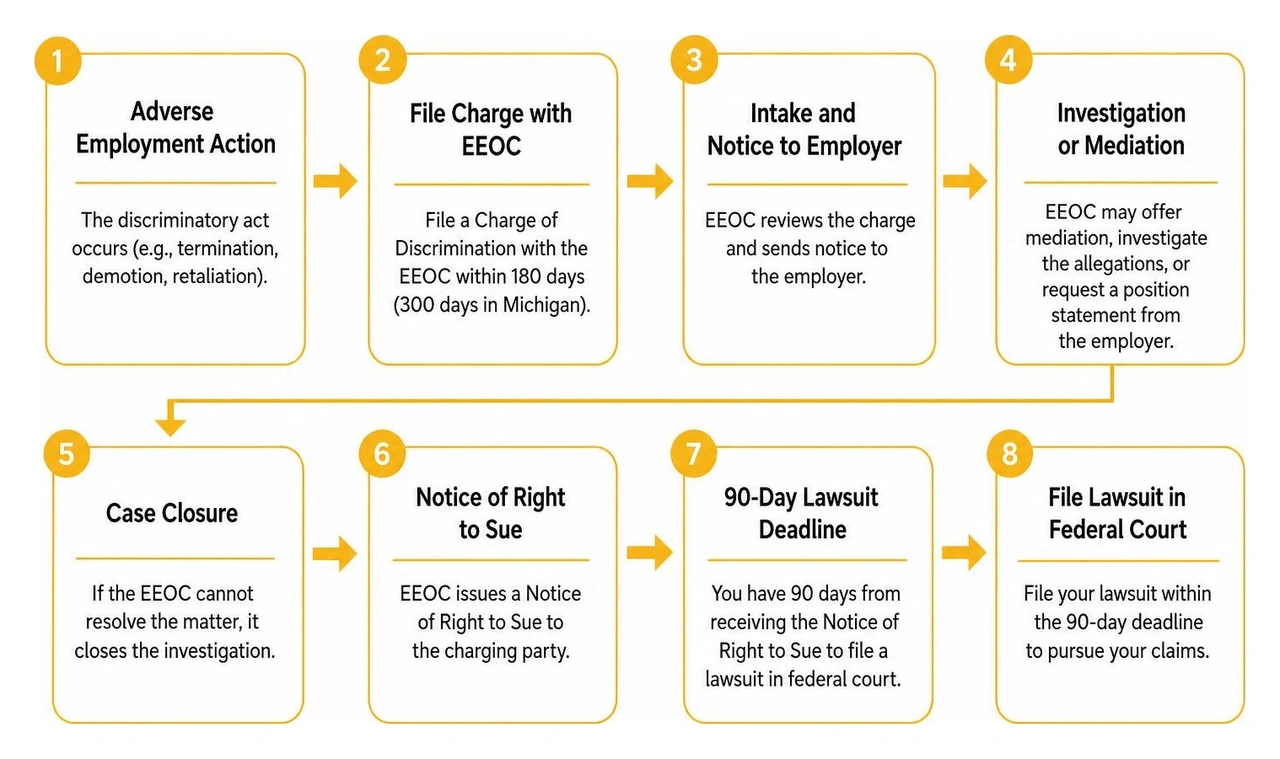
To pursue a federal workplace discrimination or retaliation claim under statutes such as Title VII, the ADA, or the ADEA, you must first exhaust your administrative remedies by filing a formal Charge of Discrimination with the Equal Employment Opportunity Commission (EEOC).
The administrative process involves specific procedural rules and strict deadlines:
- The 180-Day Rule: Under federal law, you generally have 180 calendar days from the date of the adverse employment action to file a charge with the EEOC.
- The 300-Day Extension: In jurisdictions like Michigan, where a state agency (the Michigan Department of Civil Rights) enforces state-level anti-discrimination laws under a worksharing agreement with the EEOC, this filing deadline is extended to 300 calendar days.
- Investigation and Mediation: Once a charge is filed, the agency may offer voluntary mediation, investigate the allegations, or request a position statement from the employer.
- The Right-to-Sue Notice: If the EEOC closes its investigation without resolving the matter, it issues a "Notice of Right to Sue." Once this notice is received, you have a strict 90-day window to file a lawsuit in federal court. Missing this deadline permanently bars your federal claims.
Actionable Steps After Being Wrongfully Terminated from Job Roles
Navigating the aftermath of a firing requires balancing legal strategy with everyday practical concerns:
- Apply for Unemployment Benefits Immediately: In Michigan, you can file for unemployment compensation right away. Unless your employer can prove you engaged in disqualifying willful misconduct, you are generally entitled to benefits. Winning an unemployment contest can also lock in the employer's sworn testimony early on.
- Fulfill Your Duty to Mitigate Damages: Under employment law, wronged workers must make reasonable, good-faith efforts to find comparable employment. Keep an organized log of every job application submitted, interview attended, and offer received.
- Refrain from Posting on Social Media: Do not vent about your former employer, discuss your termination, or post about your job search on social media platforms. Defense attorneys routinely look for social media posts to challenge emotional distress claims or undermine assertions of lost earning capacity.
- Consult an Employment Attorney Early: A seasoned employment lawyer can evaluate the strength of your case, handle communication with your former employer, manage agency filings, and ensure you do not miss critical statutory deadlines.
Severance Agreements, Potential Damages, and Compensation
When an employer terminates a worker under questionable circumstances, they often present a severance agreement. These documents offer a lump-sum payment or continued benefits in exchange for signing away your legal rights.
Recoverable Damages: Back Pay, Front Pay, and Compensatory Awards
If your wrongful discharge claim is successful through pre-suit negotiation, administrative settlement, or trial, the financial recovery is designed to restore you to the financial position you would have occupied had the illegal termination never occurred.
Damages in a wrongful termination case can include:
- Back Pay: Compensation for all lost wages, bonuses, commissions, accrued vacation pay, and the value of lost benefits (such as health insurance and retirement contributions) from the date of termination to the date of judgment or settlement.
- Front Pay: Anticipated future lost earnings awarded when reinstatement to your old position is impractical due to workplace hostility or organizational changes.
- Compensatory Damages: Monetary relief for non-economic harm, including emotional distress, anxiety, reputational damage, insomnia, and loss of professional standing.
- Punitive Damages: Under federal statutes, punitive damages may be awarded if the employer acted with malice or reckless indifference to your federally protected rights. Under Title VII and the ADA, combined compensatory and punitive damages are subject to federal statutory caps based on employer size:
- 15 to 100 employees: Capped at $50,000
- 101 to 200 employees: Capped at $100,000
- 201 to 500 employees: Capped at $200,000
- 501+ employees: Capped at $300,000
- Attorneys' Fees and Litigation Costs: Most prevailing employee statutes allow the court to order the employer to pay your reasonable attorneys' fees and expert witness expenses.
Severance Agreements and Release of Claims
Severance packages almost always include a comprehensive Release of Claims or general waiver. By signing, you agree to forfeit your right to sue the employer for wrongful discharge, discrimination, retaliation, or breach of contract.
Before signing any severance paperwork, keep these practical points in mind:
- Everything Is Negotiable: The initial severance offer is rarely the employer's final offer. If you have valid legal claims, those claims provide leverage to negotiate a higher payout, extended health coverage, neutral employment references, or mutual non-disparagement clauses.
- Age-Specific Protections (OWBPA): Under the Older Workers Benefit Protection Act (part of the ADEA), if you are age 40 or older, your employer must give you at least 21 calendar days to review a severance offer (or 45 days if part of a group layoff) and a mandatory 7-day revocation period after signing.
- Do Not Sign Under Duress: Employers often create artificial urgency by setting short deadlines. You have the right to have an independent employment attorney review the document before you sign.
Frequently Asked Questions About Wrongful Discharge
Can I sue if I was fired without warning?
Under at-will employment rules, an employer is generally not required to provide advance notice, verbal warnings, or progressive discipline before firing an employee. However, you may have grounds to sue if the sudden dismissal was used to hide an illegal motive, or if it violated an enforceable company policy. Evaluating potential claims for can I sue for being fired without warning requires reviewing whether the lack of warning was an abrupt departure from established company procedures or a cover for unlawful retaliation.
How long do I have to file a wrongful termination claim?
Deadlines vary depending on the legal foundation of your claim. Federal discrimination and retaliation claims require an EEOC filing within 180 or 300 days of the termination. Lawsuits based on breach of written contract or specific state-law civil rights statutes may have limitation periods ranging from three to six years in Michigan courts. Because certain statutory deadlines expire quickly, you should consult an employment lawyer as soon as possible after being let go.
Does signing a severance agreement waive my right to sue?
Yes. Signing a valid severance agreement that contains a general release typically waives your right to file a lawsuit against your employer for wrongful termination, discrimination, or related claims. However, a waiver cannot prevent you from filing an administrative charge with the EEOC, nor does it waive claims that arise after the agreement is signed. If the release was signed under fraud, misrepresentation, or duress, or failed to comply with statutory requirements under the OWBPA, the release may be challenged in court.
Conclusion
Losing your job unexpectedly is stressful, but you do not have to navigate the aftermath alone. When an employer hides unlawful discrimination, retaliation, or public policy violations behind an at-will defense, the law provides clear remedies to hold them accountable.
At Scott Batey Law, we have spent more than 25 years fighting for workers across Bingham Farms, Birmingham, Southfield, Royal Oak, Detroit, and throughout Oakland County and Michigan. Our firm provides award-winning, personalized representation across all areas of employment law, helping workers secure lost wages, emotional distress damages, and the financial recovery they deserve.
If you believe your firing crossed the line from unfair to illegal, contact us today to consult an experienced wrongful termination attorney and protect your rights.